Table of contents
- Quick mapping: reason → what to measure
- 1) Enables employee growth and development
- 2) Motivates employees (through clarity and recognition)
- 3) Identifies areas for improvement
- 4) Helps you understand the company’s performance
- 5) Supports better decision-making
- How to get started (simple rollout plan)
- Summary

Measuring employee performance is the foundation of a predictable people strategy: it clarifies expectations, improves coaching, and helps leaders make fair decisions. This guide is for HR and managers who want to improve productivity and engagement without turning performance into “surveillance.” You’ll learn five practical reasons to measure employee performance, what to measure for each one (goals, feedback, and experience metrics), and a simple rollout plan for teams that are starting from zero. If you’re building a broader feedback program, pair this with employee pulse surveys and a structured 360-degree feedback process.
Quick mapping: reason → what to measure
| Reason | What to measure | Practical signal | Helpful template |
|---|---|---|---|
| Enable growth | Skills + development needs | Career goals clarity, growth blockers | Career development survey template |
| Increase motivation | Recognition + fairness | “I’m recognized for good work” | Pulse check-in questions |
| Find improvement areas | Friction + enablement | Tooling/process blockers | Performance management survey template |
| Understand company performance | Alignment to strategy | Goal alignment by team | Quarterly goal review |
| Support decisions | Evidence for promotions | Consistent outcomes + feedback | 360 feedback + goal data |
1) Enables employee growth and development
When managers don’t measure performance consistently, coaching becomes reactive and uneven. A simple measurement cadence helps you understand what each person is good at, what’s holding them back, and what support they need.
What to do:
- Set role expectations and success criteria.
- Review progress regularly (short check-ins beat annual surprises).
- Capture development needs and career direction.
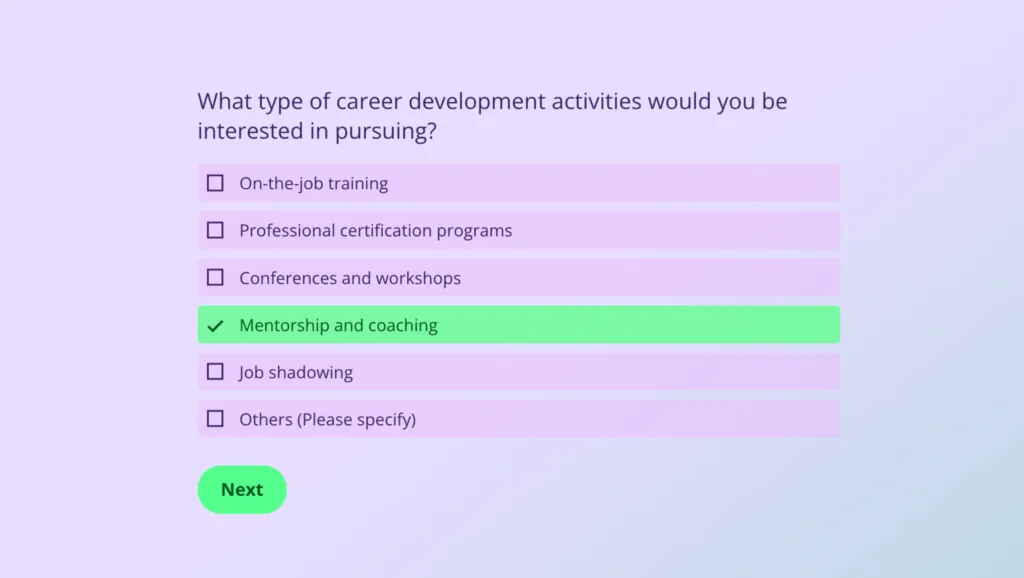
With a ready-made Career Development Survey Template, you can understand employees’ aspirations, growth opportunities, and satisfaction.
2) Motivates employees (through clarity and recognition)
Performance measurement helps you recognize strong work, spot quiet wins, and make recognition more fair. Motivation tends to drop when effort is invisible or feedback is inconsistent.
Practical actions:
- Separate coaching feedback from compensation conversations.
- Recognize outcomes and collaboration behaviors.
- Use short pulse prompts to identify where recognition is missing.
If you’re building an engagement program, see how to measure and improve employee satisfaction.
3) Identifies areas for improvement
Measurement is not only about individuals—it reveals systemic issues: unclear processes, missing tools, overloaded teams, or weak onboarding.
A simple approach:
- Track recurring blockers (in open-text responses).
- Look for patterns by role, team, and manager.
- Turn insights into a short improvement backlog.
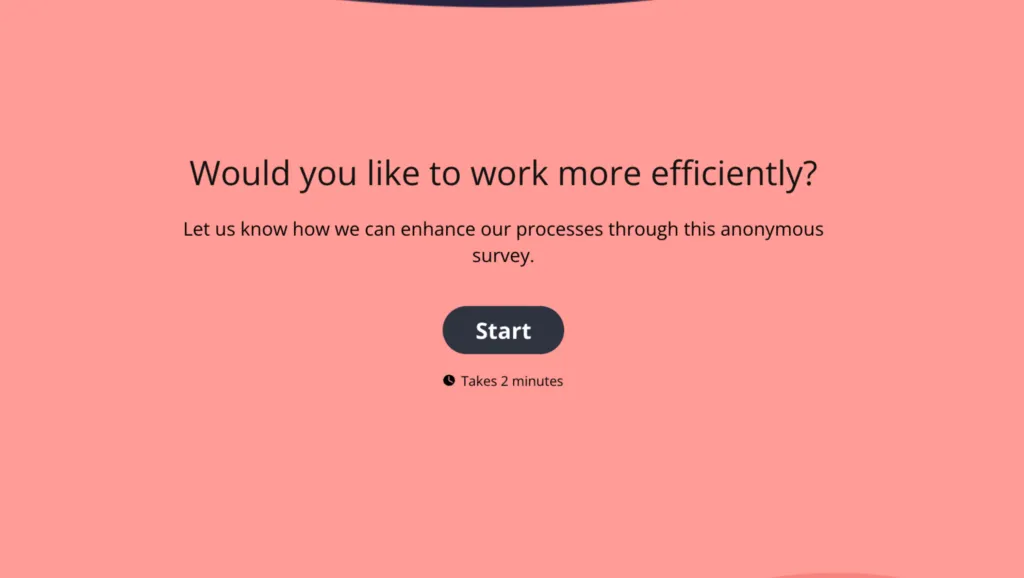
With a ready-made Performance Management Survey Template, you can quickly identify improvement opportunities and strengthen your process.
4) Helps you understand the company’s performance
Individual performance measurement is most useful when it connects to business outcomes. The goal is alignment: people should understand how their work contributes to customer impact and company strategy.
Good practices:
- Use measurable goals that map to team outcomes.
- Review progress in a consistent cadence (monthly/quarterly).
- Add qualitative context so leaders understand trade-offs.
For customer-facing teams, consider pairing internal performance signals with external feedback programs like customer satisfaction measurement.
5) Supports better decision-making
Promotions, transfers, and role changes should be based on evidence—not recency bias. A consistent measurement system makes decisions more transparent and defensible.
What helps most:
- A small set of role-relevant outcomes.
- Documented feedback from regular check-ins.
- Structured multi-rater input when collaboration is central.
If you want structured input beyond a manager-only view, use 360 feedback and learn the standard 360-degree review process.
Key reminder: performance measurement works only when it includes feedback. A score without a conversation doesn’t help employees improve.
How to get started (simple rollout plan)
If you’ve never measured employee performance in a structured way, start small:
- Define what “good” looks like for each role (outcomes + behaviors).
- Choose a lightweight system (goals + check-ins + a few recurring questions).
- Train managers on how to give feedback and run consistent conversations.
- Be transparent about what you measure and why.
- Monitor and adjust: remove metrics that don’t drive better decisions.
To operationalize feedback collection, Responsly supports structured programs like 360 feedback and recurring pulse surveys—see Responsly 360 feedback and employee feedback guides.
Summary
Measuring employee performance enables growth, improves motivation, highlights improvement areas, strengthens alignment, and supports fair decisions. The best systems are transparent, lightweight, and focused on outcomes—not surveillance. Start with a small cadence, collect qualitative context, and iterate as you learn.
FAQ
What does measuring employee performance mean?
How often should performance be measured?
What are good employee performance metrics?
How do I measure performance without micromanaging?
Can 360 feedback software help measure performance?
Tagged in
Last updated