All posts
Karol Koronowicz
Human Experience Specialist

 11 min read
Empower employees while caring for employee well-being. Prevent employee burnout and depression.
ex Platform

Employee experience (EX) has become the defining factor in attracting, retaining, and empowering top talent. In today’s competitive job market, salary alone doesn’t cut it—employees want meaningful work, growth opportunities, and a workplace that values their wellbeing. This comprehensive guide covers everything you need to know about employee experience—from foundational concepts to actionable strategies that transform your workplace.
What is Employee Experience (EX)?
Employee experience is the sum of all interactions, perceptions, and emotions an employee has with your organization—from the moment they see your job posting to long after they’ve moved on.
Unlike employee engagement (which measures emotional commitment), EX encompasses the entire journey:
- Attract: How candidates discover and perceive your employer brand
- Recruit: The application, interview, and offer process
- Onboard: First days, weeks, and months in the role
- Develop: Learning, growth, and career progression
- Retain: Ongoing experience, recognition, and support
- Exit: Offboarding and alumni relationships
Every touchpoint contributes to the overall experience—your careers page, onboarding process, manager relationships, office environment, technology tools, and even how you say goodbye.
Why Employee Experience Matters More Than Ever
The business case for EX is compelling:
- Companies with highly engaged employees are 21% more profitable
- Organizations with great EX see 40% lower turnover
- 87% of employees expect their employer to support work-life balance
- Companies with strong EX have 2.5x higher revenue growth than those with poor EX
- 70% of employees say they would leave for a company with a better culture
In the era of remote work, quiet quitting, and the Great Resignation, employee experience isn’t optional—it’s essential for survival and growth.
Key Insight: Employee experience directly impacts customer experience. Happy employees create happy customers, which drives business results.
The Three Pillars of Employee Experience
Jacob Morgan’s research identifies three environments that shape every employee’s experience:
1. Culture
Culture is the invisible force that shapes how work gets done. It includes:
- Leadership style: How managers lead and communicate
- Values: What the organization truly prioritizes (not just what’s on the wall)
- Purpose: Why the work matters beyond profit
- Psychological safety: Whether employees can speak up without fear
- Recognition: How achievements are celebrated
- Inclusion: Whether everyone feels they belong
Culture is what employees experience when no one is watching. It’s the atmosphere you feel when you “walk through the door”—whether physical or virtual.
2. Technology
The tools employees use daily profoundly impact their experience:
- Collaboration tools: How teams communicate and work together
- HR systems: Ease of requesting time off, accessing benefits, giving feedback
- Work equipment: Quality of laptops, software, and tools
- Automation: Reducing tedious manual tasks
- Mobile access: Working from anywhere seamlessly
Nothing frustrates employees more than fighting with outdated technology. Modern tools signal that you value their time and productivity.
3. Physical Workspace
The environment where work happens—whether office, home, or hybrid:
- Office design: Open spaces, quiet areas, collaboration zones
- Amenities: Cafeterias, gyms, relaxation spaces
- Remote work support: Home office stipends, equipment, policies
- Flexibility: Choice in where and when to work
- Health and safety: Clean, comfortable, ergonomic spaces
Read more about employee work-life balance and its impact on experience.
The Employee Experience Journey

Understanding each stage of the employee journey helps you identify opportunities to improve EX:
Stage 1: Attraction
Before candidates even apply, they’re forming impressions of your company:
Key Touchpoints:
- Employer branding and careers page
- Job descriptions and postings
- Social media presence
- Glassdoor and LinkedIn reviews
- Employee referrals and word of mouth
Questions to Ask:
- Does our employer brand reflect our actual culture?
- Are job descriptions clear and appealing?
- What do current employees say about us online?
Stage 2: Recruitment
The hiring process reveals a lot about how you treat people:
Key Touchpoints:
- Application process simplicity
- Communication throughout hiring
- Interview experience
- Offer and negotiation
- Pre-boarding communication
Best Practices:
- Respond to all applicants (even rejections)
- Keep candidates informed of timeline
- Make interviews a two-way conversation
- Provide feedback when possible
Learn more about avoiding candidate experience mistakes.
Stage 3: Onboarding
Onboarding sets the tone for the entire employment relationship:
Key Touchpoints:
- First day experience
- Equipment and access setup
- Introduction to team and culture
- Training and resources
- 30/60/90 day check-ins
Impact:
- Great onboarding improves retention by 82%
- New hires who feel welcome reach productivity 50% faster
- Poor onboarding doubles the likelihood of employees seeking other opportunities
Stage 4: Development
Employees want to grow—not just do the same job forever:
Key Touchpoints:
- Learning and development opportunities
- Career path clarity
- Skill-building programs
- Mentorship and coaching
- 360-degree feedback
Best Practices:
- Create clear career ladders
- Offer both vertical and lateral growth
- Invest in continuous learning
- Provide regular development conversations
Stage 5: Retention
Keeping great employees requires ongoing attention:
Key Touchpoints:
- Day-to-day work experience
- Manager relationships
- Recognition and rewards
- Compensation and benefits
- Work-life balance support
Warning Signs of Disengagement:
- Decreased productivity
- Withdrawal from team activities
- Increased absenteeism
- Lack of initiative
- Negative attitude
Learn strategies to reduce employee turnover.
Stage 6: Exit
How you handle departures impacts remaining employees and your employer brand:
Key Touchpoints:
- Resignation response
- Notice period experience
- Knowledge transfer
- Exit interviews
- Alumni relationships
Conducting thorough exit surveys provides valuable insights for improving EX.
Essential Employee Experience Metrics

What gets measured gets managed. Here are the key metrics every EX program should track:
Employee Net Promoter Score (eNPS)
What it measures: Employee loyalty and likelihood to recommend your company as a workplace
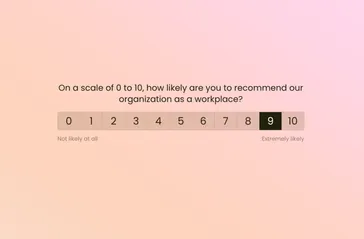
The Question: “On a scale of 0-10, how likely are you to recommend our company as a place to work?”
How to Calculate: eNPS = % Promoters (9-10) - % Detractors (0-6)
Benchmark: Good eNPS scores range from +10 to +30; excellent is +50 or higher.
Learn more in our eNPS guide.
Employee Satisfaction Score
What it measures: Overall satisfaction with the job and workplace
How to Measure: Regular satisfaction surveys with questions about various aspects of work
Key Areas to Assess:
- Job role clarity
- Manager support
- Growth opportunities
- Compensation fairness
- Work environment
See our guide on measuring and improving employee satisfaction.
Employee Engagement Score
What it measures: Emotional commitment and connection to work
Key Dimensions:
- Pride in the organization
- Willingness to go above and beyond
- Intention to stay
- Advocacy and recommendation
Create effective surveys with our employee engagement survey guide.
Turnover Rate
What it measures: Percentage of employees who leave over a period
How to Calculate: (Number of Separations / Average Number of Employees) × 100
Types to Track:
- Voluntary vs. involuntary
- Regrettable vs. non-regrettable
- By department, tenure, or role
Retention Rate
What it measures: Percentage of employees who stay over a period
How to Calculate: ((Employees at End - New Hires) / Employees at Start) × 100
Time to Productivity
What it measures: How long until new hires reach full productivity
Why it Matters: Faster time to productivity means better onboarding and training.
Internal Mobility Rate
What it measures: Percentage of roles filled by internal candidates
Why it Matters: High internal mobility indicates strong development and growth opportunities.
Building Your Employee Experience Strategy

A comprehensive EX strategy requires commitment from leadership and alignment across the organization:
Step 1: Understand Your Current State
Before improving, you need to know where you stand:
- Conduct surveys: Use pulse surveys and annual engagement surveys
- Analyze data: Review turnover, exit interviews, and performance metrics
- Listen actively: Hold focus groups and one-on-ones
- Map the journey: Document current experience at each stage
- Benchmark: Compare against industry standards
Step 2: Define Your EX Vision
Create a clear picture of what great EX looks like for your organization:
- Align with company values and culture
- Make it specific and measurable
- Involve employees in defining it
- Get leadership buy-in and sponsorship
Step 3: Identify Priority Areas
You can’t fix everything at once. Focus on:
- High impact: Changes that affect many employees significantly
- Quick wins: Easy improvements that build momentum
- Pain points: Areas with the most negative feedback
- Strategic priorities: Aligned with business goals
Step 4: Design Interventions
For each priority area, design specific improvements:
Example: Improving Onboarding
- Create structured 90-day onboarding program
- Assign dedicated buddies to new hires
- Implement weekly check-ins with managers
- Build comprehensive self-service resources
- Send welcome packages before day one
Step 5: Empower Managers
Managers have the biggest impact on employee experience:
- Train managers on EX principles
- Provide tools for regular feedback
- Hold managers accountable for team engagement
- Support manager development
Step 6: Measure and Iterate
EX is never “done”—it requires continuous improvement:
- Track metrics consistently over time
- Act on feedback promptly
- Communicate changes back to employees
- Celebrate wins and learn from failures
Common Employee Experience Mistakes
Avoid these pitfalls that undermine EX efforts:
1. Treating EX as an HR Initiative Only
EX spans every function—IT, facilities, operations, and leadership must be involved.
Solution: Create cross-functional EX teams with executive sponsorship.
2. Survey Fatigue Without Action
Asking for feedback but never acting on it destroys trust.
Solution: Close the loop by communicating what you heard and what you’re doing about it.
3. One-Size-Fits-All Approach
Different employees have different needs based on role, tenure, and life stage.
Solution: Segment your workforce and personalize experiences where possible.
4. Ignoring Manager Experience
Managers can’t create great experiences for their teams if they’re struggling themselves.
Solution: Invest equally in manager experience and support.
5. Focusing Only on Perks
Free snacks and ping pong tables don’t compensate for poor management or lack of growth.
Solution: Focus on fundamentals first—purpose, growth, recognition, and belonging.
6. Neglecting Remote and Hybrid Workers
Out of sight shouldn’t mean out of mind.
Solution: Design experiences that work equally well for in-office, remote, and hybrid employees.
Employee Experience Best Practices by Stage
Attraction Best Practices
- Showcase authentic employee stories
- Be transparent about culture and expectations
- Highlight growth and development opportunities
- Feature diversity and inclusion efforts
Recruitment Best Practices
- Simplify the application process
- Communicate timeline and next steps
- Train interviewers on candidate experience
- Provide constructive feedback to candidates
Onboarding Best Practices
- Start before day one with pre-boarding
- Create memorable first-day experiences
- Assign buddies and mentors
- Set clear 30/60/90 day expectations
- Check in frequently during first months
Development Best Practices
- Offer diverse learning opportunities
- Create clear career paths
- Provide regular feedback and coaching
- Support both technical and soft skill growth
- Encourage internal mobility
Retention Best Practices
- Recognize contributions regularly
- Support work-life balance
- Address issues promptly
- Foster connection and belonging
- Offer competitive compensation
Exit Best Practices
- Conduct thorough exit interviews
- Make offboarding respectful and smooth
- Maintain alumni networks
- Learn and improve from departures
Technology and Tools for Employee Experience
The right technology enables scalable EX excellence:
Employee Feedback Platforms
Tools like Responsly help you:
- Create and distribute employee surveys
- Collect real-time feedback through pulse surveys
- Analyze engagement trends over time
- Enable anonymous feedback
- Trigger alerts for concerning responses
Explore employee experience platforms for more options.
HRIS and Employee Self-Service
Modern HR systems reduce friction in everyday tasks like:
- Time-off requests
- Benefits enrollment
- Payroll access
- Policy information
Communication and Collaboration Tools
Enable seamless work with:
- Messaging platforms (Slack, Teams)
- Video conferencing
- Project management tools
- Knowledge bases
Recognition Platforms
Facilitate peer and manager recognition to celebrate wins and reinforce values.
Learning Management Systems
Support continuous development with accessible training and courses.
The Future of Employee Experience
Stay ahead by understanding emerging EX trends:
AI-Powered Personalization
Artificial intelligence enables personalized experiences at scale—from customized learning paths to predictive retention analytics.
Wellbeing as a Priority
Mental health, burnout prevention, and holistic wellbeing are becoming central to EX strategies. Learn about managing employee stress and preventing burnout.
Skills-Based Organizations
Moving from job titles to skills enables more flexible careers and better talent utilization.
Continuous Listening
Real-time feedback replaces annual surveys, enabling faster response to employee needs.
Purpose-Driven Work
Employees increasingly seek meaning and impact in their work beyond just a paycheck.
Hybrid Work Evolution
Organizations are still figuring out optimal hybrid models that balance flexibility with collaboration.
Getting Started: Your EX Action Plan
Ready to transform your employee experience? Here’s your action plan:
Week 1-2: Assess Your Current State
- Review existing employee feedback and metrics
- Conduct quick pulse survey on key EX areas
- Map the current employee journey
- Identify top pain points
Week 3-4: Build Your Foundation
- Define your EX vision and principles
- Get leadership alignment and sponsorship
- Identify priority areas for improvement
- Set measurable goals
Month 2: Launch Your Listening Program
- Implement regular pulse surveys
- Set up dashboards to monitor metrics
- Create feedback loops for action
- Train managers on EX conversations
Month 3 and Beyond: Iterate and Improve
- Implement improvements based on feedback
- Measure impact and adjust
- Expand to additional EX areas
- Build continuous improvement culture
Conclusion
Employee experience is no longer a “nice to have”—it’s a strategic imperative that directly impacts business results. Organizations that invest in understanding their employees, designing meaningful journeys, and continuously improving will win the war for talent.
The good news? You don’t need to transform everything overnight. Start by listening to your employees, pick one area to improve, measure the results, and build from there. Small improvements compound into transformational change.
Ready to elevate your employee experience? Create a free Responsly account and start collecting employee feedback today. Use our ready-made templates to launch eNPS, engagement, and pulse surveys in minutes.