All posts
Karol Koronowicz
Human Experience Specialist

 11 min read


Product experience (PX) has become the ultimate differentiator in the digital age. In a market flooded with options, your product itself is your most powerful marketing tool. Users who love your product become advocates; those who don’t, churn. This comprehensive guide covers everything you need to know about product experience—from foundational concepts to advanced strategies that drive adoption, retention, and growth.
What is Product Experience (PX)?
Product experience is the complete journey and relationship users have with your product—encompassing every interaction, emotion, and perception from the moment they discover it to becoming power users (or churning).
Unlike user experience (UX), which focuses primarily on interface design and usability, PX is broader:
- Discovery: How users find and first perceive your product
- Evaluation: The trial or demo experience
- Onboarding: Getting users to their first “aha moment”
- Adoption: Building habits around core features
- Expansion: Discovering advanced functionality
- Advocacy: Recommending the product to others
Every element contributes to PX—your marketing messaging, pricing page, signup flow, onboarding emails, in-app guidance, feature releases, support interactions, and even your changelog.
Why Product Experience Matters More Than Ever
The numbers tell the story:
- 96% of unhappy users don’t complain—they just leave
- 40-60% of free trial users never return after signing up
- Products with great onboarding see 50% higher retention
- 70% of buying experiences are based on how users feel they’re treated
- Companies with strong PX grow 2x faster than competitors
In the era of product-led growth (PLG), your product is your primary acquisition, conversion, and retention engine. Users expect to try before they buy, experience value quickly, and self-serve their way to success.
Key Insight: In subscription businesses, acquisition is just the beginning. The real revenue comes from retention and expansion—both driven by exceptional product experience.
The Product Experience Framework
Building world-class PX requires understanding and optimizing each stage of the user journey:
1. Discovery & First Impressions
Before users even sign up, they’re forming opinions about your product:
Key Touchpoints:
- Marketing website and messaging
- Product positioning and differentiation
- Social proof (reviews, testimonials, case studies)
- Demo videos and screenshots
- Pricing transparency
Best Practices:
- Clearly communicate your value proposition
- Show the product in action (screenshots, videos, interactive demos)
- Address objections proactively
- Make starting easy (free trials, freemium options)
2. Signup & Initial Experience
The signup process sets expectations for everything that follows:
Key Touchpoints:
- Registration flow simplicity
- Social login options
- Initial data collection
- Welcome messaging
- First login experience
Best Practices:
- Minimize friction (ask only for essential information)
- Set expectations about what comes next
- Personalize based on user type or use case
- Create a sense of progress and achievement
3. Onboarding & Activation
Onboarding is where most products win or lose users:
The Goal: Get users to their “aha moment”—the point where they first experience your core value.
Key Elements:
- Welcome tours and product walkthroughs
- Setup wizards and configuration guidance
- Sample data and templates
- Contextual tips and tooltips
- Progress indicators and checklists
- Email sequences and nudges
Onboarding Best Practices:
| Do | Don’t |
|---|---|
| Focus on one core action | Overwhelm with all features |
| Show, don’t tell | Rely on lengthy documentation |
| Celebrate quick wins | Make users wait for value |
| Personalize the path | Use one-size-fits-all approach |
| Make it skippable | Force linear completion |
Key Metric: Time-to-Value (TTV)—how long until users experience your core benefit.
4. Core Product Usage
Once activated, users need to build habits around your product:
Key Focus Areas:
- Core workflow optimization
- Performance and reliability
- Feature discoverability
- Keyboard shortcuts and power-user features
- Integrations with other tools
Best Practices:
- Make the primary action obvious and frictionless
- Ensure fast load times and responsive interfaces
- Provide helpful defaults while allowing customization
- Surface relevant features at the right moments
5. Feature Adoption & Expansion
Great products grow their footprint within user workflows:
Strategies:
- Progressive disclosure of advanced features
- Contextual feature announcements
- Usage-based recommendations
- In-app tutorials and guides
- Feature request feedback loops
Key Metric: Feature adoption rate—percentage of users actively using key features.
6. Retention & Ongoing Value
Long-term retention requires continuous value delivery:
Key Elements:
- Regular product improvements
- Proactive communication about new features
- Re-engagement campaigns for inactive users
- Success resources and best practices
- Community and peer learning
Essential Product Experience Metrics
You can’t optimize what you don’t measure. Here are the essential PX metrics:
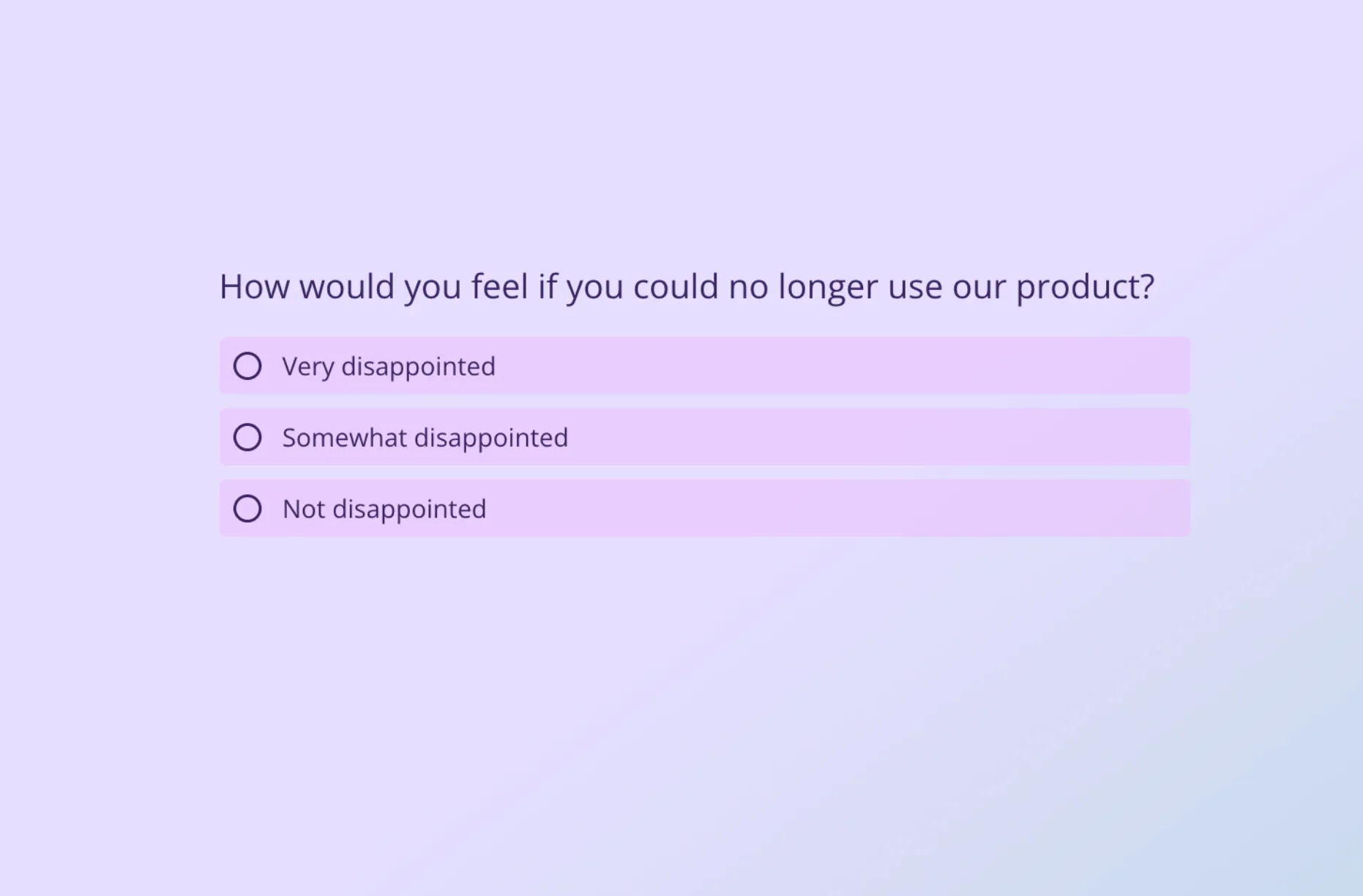
Product-Market Fit Score
What it measures: How essential your product is to users
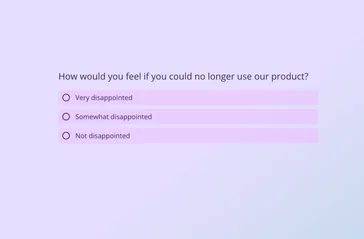
The Question: “How would you feel if you could no longer use this product?”
How to Calculate: (% answering “Very disappointed”) × 100
Benchmark: 40%+ indicates good product-market fit.
Activation Rate
What it measures: Percentage of signups who reach your defined “aha moment”
How to Calculate: (Users who completed activation / Total signups) × 100
Why it Matters: Low activation = users aren’t finding value fast enough.
Time-to-Value (TTV)
What it measures: How long until users experience your core benefit
Why it Matters: Shorter TTV correlates with higher retention and conversion.
Feature Adoption Rate
What it measures: Percentage of users actively using specific features
How to Calculate: (Users using feature / Total active users) × 100
Why it Matters: Identifies underutilized features that need better discovery or improvement.
Net Promoter Score (NPS)
What it measures: User loyalty and likelihood to recommend
The Question: “On a scale of 0-10, how likely are you to recommend our product?”
How to Calculate: % Promoters (9-10) - % Detractors (0-6)
Learn more in our NPS implementation guide.
Customer Effort Score (CES)
What it measures: How easy it is to use your product and accomplish goals
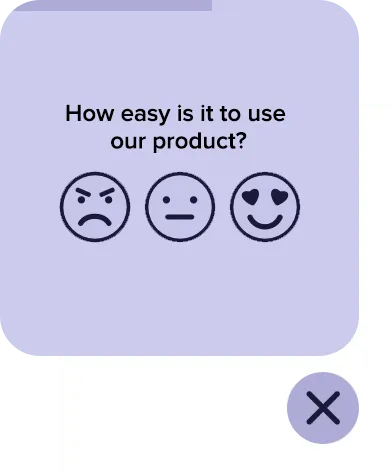
The Question: “How easy was it to [complete task]?” (Scale of 1-7)
Why it Matters: Lower effort = higher satisfaction and retention.
Retention Rate
What it measures: Percentage of users still active after a period
Types to Track:
- Day 1, Day 7, Day 30 retention (for engagement patterns)
- Monthly/annual retention (for business health)
Churn Rate
What it measures: Percentage of users who stop using your product
How to Calculate: (Lost users / Starting users) × 100
Understanding churn rate helps identify experience gaps.
Product Engagement Score (PES)
What it measures: Overall product engagement combining adoption, stickiness, and growth
Components:
- Adoption (breadth of feature usage)
- Stickiness (frequency of usage)
- Growth (expansion within accounts)
Building Your Product Experience Strategy

A comprehensive PX strategy requires alignment between product, marketing, and customer success teams:
Step 1: Define Your Activation Moment
Before anything else, identify what “success” looks like for new users:
- What’s the core action that delivers your main value?
- What do retained users have in common in their first session/week?
- What’s the shortest path to that moment?
Examples:
- Slack: Sending messages to teammates
- Dropbox: Uploading and syncing files
- Canva: Creating and downloading a design
Step 2: Map the User Journey
Document every touchpoint from discovery to power user:
- Where do users drop off?
- What causes friction?
- What delights users?
- Where are the decision points?
Use analytics, session recordings, and product feedback surveys to understand the journey.
Step 3: Segment Your Users
Different users have different needs. Segment by:
- Use case: What problem are they solving?
- Role: Their job function and technical level
- Company size: SMB vs. enterprise needs
- Lifecycle stage: New user vs. power user
- Engagement level: Active vs. at-risk
Learn more about user segmentation methods.
Step 4: Design Personalized Experiences
Tailor the experience based on segments:
- Onboarding paths: Different flows for different use cases
- Feature recommendations: Based on user behavior and goals
- Communication: Relevant messaging at the right time
- Support resources: Appropriate for skill level
Step 5: Implement Feedback Loops
Create systematic ways to collect and act on user feedback:
- In-app surveys: At key moments (after onboarding, feature use)
- NPS and CSAT: Regular pulse on satisfaction
- Feature requests: Structured collection and prioritization
- User interviews: Deep qualitative understanding
Use closed-loop feedback to show users their input matters.
Step 6: Continuously Iterate
PX is never “done.” Build a culture of continuous improvement:
- Monitor metrics daily/weekly
- Run experiments on key flows
- Ship improvements frequently
- Communicate changes to users
Product Experience Best Practices
Onboarding Best Practices
1. Define success clearly Know exactly what “activated” means and optimize for it relentlessly.
2. Reduce time-to-value Every extra step between signup and value is a potential dropout.
3. Use progressive disclosure Don’t overwhelm with features; reveal complexity gradually.
4. Provide multiple learning paths Some users want guided tours; others prefer to explore. Support both.
5. Celebrate wins Acknowledge progress and achievements to build momentum.
In-App Communication Best Practices
1. Be contextual Show messages when and where they’re relevant.
2. Be helpful, not annoying Every message should add value, not just promote features.
3. Allow dismissal Let users hide or delay messages they’re not ready for.
4. Personalize Use what you know about users to make messages relevant.
5. Test and iterate A/B test messaging to optimize engagement.
Feature Adoption Best Practices
1. Make discovery natural Surface features in the context where they’re useful.
2. Show, don’t tell Interactive demonstrations beat documentation.
3. Use social proof “Teams like yours use this feature to…”
4. Lower barriers Provide templates, presets, and examples.
5. Measure and optimize Track adoption and continuously improve discovery.
Common Product Experience Mistakes
Avoid these pitfalls that undermine PX efforts:
1. Feature Dumping
Showing new users every feature at once overwhelms and confuses them.
Solution: Focus on core value first; introduce advanced features progressively.
2. Assuming Users Will Figure It Out
“Our product is intuitive” is rarely true for new users.
Solution: Invest in onboarding, guidance, and contextual help.
3. Ignoring Mobile Experience
Many users first encounter products on mobile devices.
Solution: Design mobile-first or ensure mobile parity.
4. One-Size-Fits-All Approach
Different users have different needs, contexts, and goals.
Solution: Segment users and personalize experiences accordingly.
5. Collecting Feedback Without Acting
Asking for feedback but never improving destroys trust.
Solution: Close the loop—tell users what you changed based on their input.
6. Optimizing for Signups Over Activation
Vanity metrics don’t drive business results.
Solution: Focus on activation and retention, not just top-of-funnel.
7. Neglecting Existing Users
Obsessing over new user experience while ignoring power users.
Solution: Balance new user optimization with existing user satisfaction.
Technology and Tools for Product Experience
The right tools enable scalable PX excellence. Explore our guide on best product experience software.
Product Analytics
Track user behavior, feature usage, and conversion funnels:
- Mixpanel, Amplitude, Heap
- Google Analytics, PostHog
User Onboarding Platforms
Create in-app guides, tours, and checklists:
- UserGuiding, Appcues, Pendo
- WalkMe, Chameleon
Feedback Collection
Gather user feedback through surveys and widgets:
- Responsly for in-app surveys and feedback
- Hotjar, UserVoice for feedback widgets
Session Recording
Watch how users interact with your product:
- FullStory, LogRocket, Hotjar
A/B Testing
Experiment with different experiences:
- Optimizely, VWO, LaunchDarkly
Customer Communication
Engage users with targeted messaging:
- Intercom, Customer.io, Braze
The Future of Product Experience
Stay ahead by understanding emerging PX trends:
AI-Powered Personalization
Artificial intelligence enables hyper-personalized experiences—predicting what users need before they ask and customizing interfaces in real-time.
Product-Led Growth (PLG)
More companies are using the product itself as the primary growth driver, making PX even more critical for acquisition and expansion.
Self-Service Everything
Users expect to accomplish everything without human assistance—from onboarding to troubleshooting to upgrading.
Embedded Analytics
Users want insights and value directly in the product, not in separate dashboards or reports.
Community-Led Experience
Peer learning, user communities, and customer-generated content are becoming integral parts of the product experience.
Privacy-First Design
Building great experiences while respecting user privacy and data preferences.
Getting Started: Your PX Action Plan
Ready to transform your product experience? Here’s your action plan:
Week 1-2: Assess Your Current State
- Define your activation moment and key metrics
- Analyze current user journey with analytics
- Identify biggest drop-off points
- Collect qualitative feedback from users
Week 3-4: Build Your Foundation
- Map the complete user journey
- Create user segments and personas
- Define personalized paths for key segments
- Set baseline metrics and goals
Month 2: Optimize Critical Flows
- Redesign onboarding for faster activation
- Implement feedback surveys at key moments
- Create in-app guidance for core features
- Launch re-engagement flows for inactive users
Month 3 and Beyond: Iterate and Expand
- Analyze results and iterate on improvements
- Expand to secondary flows and features
- Build advanced segmentation and personalization
- Create a continuous improvement culture
Conclusion
Product experience is no longer a “nice to have”—it’s the core of competitive advantage in digital products. Companies that invest in understanding their users, designing seamless journeys, and continuously improving will win market share, reduce churn, and build sustainable growth.
The good news? You don’t need to transform everything overnight. Start by defining what success looks like for your users, identify the biggest barrier to that success, fix it, and build from there. Small improvements compound into transformational results.
Ready to elevate your product experience? Create a free Responsly account and start collecting product feedback today. Use our ready-made templates to launch in-app surveys, NPS, and feature feedback collection in minutes.