Table of contents
- Pulse survey overview
- Tips on how to make a good pulse survey
- How are pulse surveys different from engagement surveys?
- Customer pulse survey: what is it and how is it different from other surveys
- How do customer pulse surveys differ form NPS?
- What are the benefits of getting employee feedback through pulse surveys?
- How to launch a pulse survey program with Responsly
- Summary

A pulse survey is a short, recurring survey that measures sentiment at key moments—so you can spot issues early and track improvement over time. This guide is for HR teams, people managers, customer success, and product teams who want a lightweight way to monitor employee engagement or customer experience without running long surveys. You’ll learn when to run pulse surveys, what to ask, how to analyze results, and how to launch a pulse survey program using Responsly surveys and employee experience templates.
Pulse survey overview
A pulse survey is a powerful tool for gathering feedback from a particular group. It typically involves scheduling frequent check-ins with the same audience (weekly, biweekly, monthly, or quarterly). These regular interactions help you understand sentiment and engagement trends, measure the impact of changes, and respond before small problems turn into big ones.
A pulse survey typically consists of just 3–10 questions. Despite the limited number of questions, pulse surveys offer several benefits:
They identify issues that require immediate attention. Pulse surveys capture what’s happening now, not what people remember from months ago.
They measure the impact of events, both big and small. Run pulse surveys before and after initiatives (new onboarding, new support workflow, policy updates) to see if results move.
They demonstrate you care. When you ask regularly and follow up, employees and customers feel heard.
Pulse survey vs other survey types (quick comparison)
| Survey type | Typical length | Cadence | Best for |
|---|---|---|---|
| Pulse survey | 3–10 questions | Weekly–Monthly | Tracking trends, detecting issues early |
| Engagement survey | 30–60 questions | Quarterly–Annually | Deep diagnosis of engagement drivers |
| NPS survey | 1–2 questions | Quarterly–Biannual | Measuring loyalty / advocacy |
| CSAT survey | 1–3 questions | After touchpoint | Measuring satisfaction with an interaction |
| CES survey | 1–3 questions | After support task | Measuring effort and friction |
If you’re also measuring loyalty, start with Net Promoter Score (NPS) and run pulse surveys to understand why it moves over time.
Tips on how to make a good pulse survey
Use these principles to keep your pulse survey program sustainable and high-signal:
It is important to regularly evaluate the satisfaction and engagement of your employees and customers. One effective way to do this is through a pulse survey. Here are some tips on how to get the most out of your survey:
Be clear about the purpose and follow-up. Tell people what you’re measuring and what will happen with results. This increases participation and honesty.
Use anonymity when appropriate. An anonymous pulse survey increases honesty—especially for employee feedback.
Add one open-ended question. A single “Why?” question adds context without turning the survey into homework.
Close the loop. Share what you learned and what you’ll change. This is the difference between “we collect feedback” and “we improve.” Learn the framework in closed-loop feedback.
Recommended question mix (3–10 questions)
If you’re not sure what to ask, use this template structure:
- 1–2 outcome questions: overall satisfaction or engagement (rating scale)
- 1–3 driver questions: workload, clarity, support, product value, etc.
- 1 behavior / intent question: “How likely are you to…” (optional)
- 1 open-ended question: “What’s one thing we should improve next?”
For inspiration, see customer satisfaction survey questions and the full library in survey templates.
How are pulse surveys different from engagement surveys?
Pulse surveys and engagement surveys are tools organizations use to gather feedback. However, there are some key differences:
Pulse surveys are typically shorter and more frequent than engagement surveys. They are designed to provide a quick snapshot of sentiment at a specific point in time. Pulse surveys are often sent out monthly or quarterly and consist of several questions that can be answered quickly.
Engagement surveys are more comprehensive and are typically conducted quarterly, bi-annually, or annually. They provide a deeper understanding of engagement drivers, and they’re better suited for root-cause analysis and strategic planning.
Customer pulse survey: what is it and how is it different from other surveys
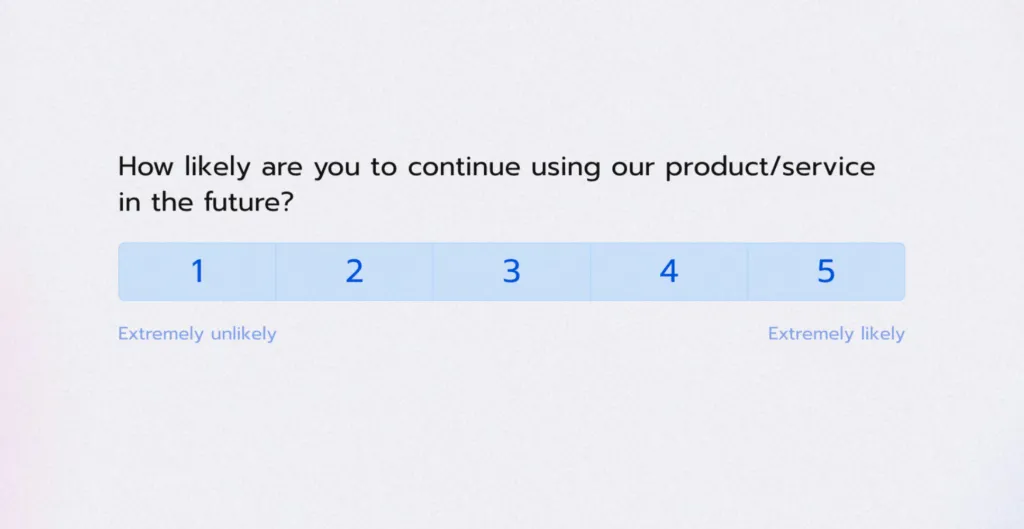
Customer pulse surveys are a condensed version of traditional customer feedback surveys. They focus on one or two questions instead of a long questionnaire and are sent more frequently to customers (weekly, monthly, or quarterly).
Customer pulse surveys provide immediate insights that require attention. Because they are frequent, respondents can share current concerns rather than outdated ones.
They signal that you care. When customers see regular check-ins, they feel valued.
They help you measure the impact of both small and large events, such as releases, pricing changes, or support process updates.
How do customer pulse surveys differ form NPS?
Customer pulse surveys and Net Promoter Score (NPS) are both used to gauge customer experience, but they serve different goals.
Customer Pulse Surveys are typically shorter and sent out more frequently than NPS surveys. They aim to capture the customer’s mood at a specific moment in time and provide a snapshot of customer sentiment. In contrast, NPS surveys are typically longer and sent out less frequently. They aim to measure customer loyalty by asking customers to rate how likely they are to recommend a product or service to others.
Another key difference between the two is the way they are scored. Customer Pulse Surveys typically use a simple rating scale (e.g. 1-5) to measure customer satisfaction. On the other hand, NPS surveys use a more complex scoring system that includes detractors, promoters, and passives.
Despite these differences, both types of surveys can provide valuable insights into customer satisfaction, and businesses may choose to use one or both depending on their specific needs and goals.
What are the benefits of getting employee feedback through pulse surveys?
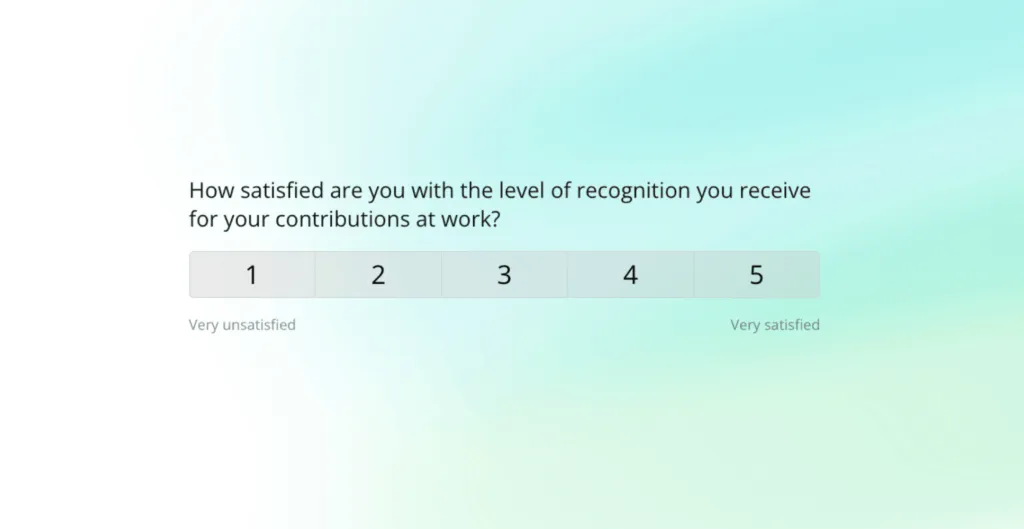
Employee pulse surveys can provide valuable insights into employee satisfaction and engagement. By regularly conducting these surveys, organizations can identify areas for improvement and make data-driven decisions to address issues. Pulse surveys also improve communication and transparency, because employees can provide feedback and see that it leads to action. This is exactly the kind of program HR teams run to keep a steady read on employee sentiment.
They are quick and easy to administer (typically a few questions, completed in minutes).
They provide a consistent snapshot of sentiment, which helps you identify trends and patterns in employee feedback.
They improve communication and transparency. Allowing employees to provide feedback makes them feel heard and valued, which can increase job satisfaction and engagement.
How to launch a pulse survey program with Responsly
If you want pulse surveys that are easy to send, easy to analyze, and easy to act on, use Responsly:
- Launch faster with templates: Start with employee pulse survey templates or customer pulse survey templates.
- Distribute anywhere: Send via email, link/QR, or WhatsApp using WhatsApp distribution.
- Track trends automatically: Use dashboards in survey results to see changes over time.
- Pair with core CX metrics: Combine pulse surveys with NPS and post-touchpoint CSAT.
Summary
A pulse survey is a short, recurring survey that helps you monitor employee engagement and customer sentiment in real time. Keep it brief, run it consistently, analyze trends (not just snapshots), and always close the loop with action.
Ready to launch your first pulse survey? Create a free Responsly account and start with a proven template.
FAQ
What is a pulse survey?
How often should you run pulse surveys?
How many questions should a pulse survey have?
Pulse survey vs engagement survey: what’s the difference?
Last updated