All posts
Karol Koronowicz
Human Experience Specialist

 7 min read


Good survey design is the foundation of valuable research. The way you structure questions, organize your survey, and present it to respondents directly impacts the quality of data you collect. In this comprehensive guide, we’ll walk you through everything you need to know about creating effective surveys.
What is Survey Design?
Survey design refers to the systematic process of creating a well-structured questionnaire or set of questions intended to collect specific information from a group of respondents. It involves careful planning and consideration of various factors to ensure the survey gathers accurate, relevant, and valuable data.
10 Steps to Good Survey Design
Creating a good survey design is crucial to gather valuable insights and accurate data. Follow these 10 steps to ensure your survey is effective and yields meaningful results:
1. Define Your Objectives
Clarify the purpose of your survey and the specific information you want to gather. Clearly outline the research goals and the questions you aim to answer.
Ask yourself:
- What decisions will this data inform?
- What specific insights do I need?
- How will I use the results?
2. Identify Your Target Audience
Understand who your respondents are and tailor the survey to their characteristics and preferences. Knowing your audience helps in framing relevant questions and increasing response rates.
Consider:
- Demographics (age, location, profession)
- Technical proficiency
- Language preferences
- Available time
3. Choose the Right Question Types
Select appropriate question formats based on your research objectives. Utilize closed-ended questions for quantitative data and open-ended questions for qualitative insights.
Common types include:
- Multiple choice
- Likert scale
- Rating scales
- Open-ended
- Matrix questions
4. Craft Clear and Concise Questions
Write questions that are easy to understand and free from ambiguity or bias. Keep the language simple and straightforward to ensure respondents can provide accurate answers.
Best practices:
- Use simple, everyday language
- Avoid double-barreled questions
- Be specific about timeframes
- Eliminate leading questions
5. Consider the Survey Length
Keep your survey concise and focused. Avoid overwhelming respondents with too many questions, as longer surveys lead to lower completion rates.
Guidelines:
- Aim for 5-10 minutes completion time
- Prioritize essential questions
- Remove nice-to-have questions
- Use progress indicators
6. Organize Questions Logically
Structure your survey in a logical flow, leading from general to specific topics. Ensure that questions follow a coherent sequence for a smoother survey-taking experience.
Tips:
- Start with easy, engaging questions
- Group related questions together
- Place sensitive questions later
- End with demographic questions
7. Provide Diverse Response Options
Offer a variety of response choices to capture different perspectives. Include “Other” or “Not Applicable” options where applicable to accommodate various situations.
Remember to:
- Make options mutually exclusive
- Include all possible answers
- Offer neutral options when appropriate
- Allow for “Don’t know” responses
8. Design a User-Friendly Interface
Create an aesthetically pleasing and user-friendly survey layout. Use clear fonts, colors, and formatting to enhance visual appeal and encourage participation.
Design elements:
- Consistent branding
- Mobile-responsive layout
- Clear navigation
- Visual progress indicators
9. Conduct Pilot Testing
Before launching the survey, conduct a small-scale pilot test with a select group of participants. This helps identify any issues with question clarity, survey flow, or technical functionality.
Test for:
- Question clarity
- Technical issues
- Completion time
- Response patterns
10. Ensure Data Security and Anonymity
Prioritize the privacy and confidentiality of respondents’ data. Use secure data storage measures and assure respondents of their anonymity.
Security measures:
- SSL encryption
- GDPR compliance
- Clear privacy policy
- Anonymous response options
Popular Questions in Survey Design
In survey design, popular and commonly used question types include:
Multiple-Choice Questions
Participants choose from a list of predefined response options. This format is effective for gathering quantitative data and is easy for respondents to answer.
Likert Scale Questions
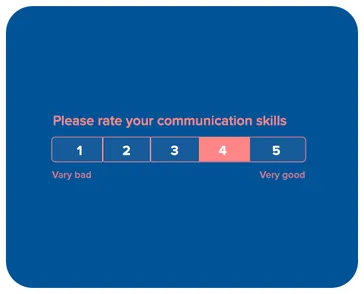
Participants rate their level of agreement or disagreement with a statement using a scale (e.g., “Strongly Disagree” to “Strongly Agree”). Likert scales provide valuable insights into attitudes and opinions.
Open-Ended Questions
Respondents provide detailed, written responses in their own words. Open-ended questions offer qualitative data, allowing participants to express their thoughts freely.
Rating or Ranking Questions
Participants assign ratings or rankings to a set of items, allowing you to compare preferences or assess importance.
Demographic Questions
These collect basic information about respondents (age, gender, occupation, location), helping in data segmentation and analysis.
Yes/No Questions
Participants simply choose between “Yes” or “No,” providing a quick way to gather specific information.
Matrix or Grid Questions
These present a series of statements or items, and respondents rate each item along the same scale. Useful for collecting data on multiple aspects within a single question.
Net Promoter Score (NPS) Questions
Participants rate the likelihood of recommending a product or service on a scale of 0 to 10, providing valuable customer loyalty insights.
Semantic Differential Scale Questions
Respondents rate items based on opposing adjectives (e.g., “hot/cold,” “expensive/affordable”).
Forced Choice Questions
Participants must select only one option from a list of equally attractive or unattractive choices.
5 Tips for Writing Great Survey Questions
Writing great questions is crucial to ensure the accuracy and quality of data collected:
1. Be Clear and Specific
Use straightforward language and avoid ambiguity. Ensure respondents clearly understand what is being asked and can provide accurate answers.
2. Stay Neutral and Unbiased
Keep questions neutral and free from any bias or leading language that could influence respondents’ answers. Maintain objectivity.
3. Use Appropriate Question Types
Choose the most suitable question types for your research objectives. Utilize closed-ended questions for quantitative data and open-ended questions for qualitative insights.
4. Keep it Short and Relevant
Keep questions concise and focused on the survey’s objectives. Avoid unnecessary or irrelevant information to prevent respondent fatigue.
5. Pilot Test Your Questions
Before launching, conduct a pilot test with a small group to identify issues with question clarity, wording, or response options. Revise based on feedback.
Survey Design is Complete. What’s Next?
After designing your survey, follow these steps:
1. Implement the Survey
Launch the survey by distributing it to your target audience through email, social media, website, or mobile apps. Ensure it’s accessible and user-friendly.
2. Data Collection
As respondents complete the survey, their responses are collected and stored. Monitor the process to track response rates and ensure you’re reaching your intended audience.
3. Clean and Organize Data
Once collection is complete, clean the data to remove errors or incomplete responses. Organize it in a structured manner to facilitate analysis.
4. Analyze the Data
Use appropriate statistical and qualitative analysis techniques. Quantitative data can be analyzed using software like Excel, SPSS, or R, while qualitative data may require manual coding and thematic analysis.
5. Interpret the Results
Analyze survey results to identify patterns, trends, and insights. Interpret findings in the context of your research objectives and draw meaningful conclusions.
6. Communicate Findings
Present results in a clear and concise manner. Use visuals like charts, graphs, and tables to enhance understanding. Prepare a comprehensive report for stakeholders.
7. Take Action
Utilize findings to inform decision-making, improve processes, or address areas of concern. Use insights to make data-driven decisions and drive positive change.
8. Follow Up
Depending on objectives, consider conducting follow-up surveys to track changes over time or gain deeper insights into specific topics.
9. Learn and Improve
Reflect on the survey process and outcomes to identify areas for improvement in future surveys. Learn from the experience to enhance effectiveness.
Conclusion
Remember, survey design is just the first step in utilizing data to gain valuable insights. The real power lies in how you analyze and interpret the data to make informed decisions and drive positive outcomes for your research, business, or academic pursuits.
Ready to create your survey? Create a free Responsly account and start designing professional surveys that get results.