Table of contents
- What is Customer Service?
- Why Customer Service Matters for Business Success
- How to Measure Customer Service Quality
- How to Improve Customer Service: A Step-by-Step Framework
- Measuring Customer Service with Surveys
- How Responsly Helps Improve Customer Service
- Customer Service vs. Customer Experience: Understanding the Difference
- Common Customer Service Mistakes to Avoid
- Summary and Next Steps

Customer service is the direct assistance and support a company provides to customers before, during, and after they purchase a product or service. For business leaders, support managers, and CX professionals, mastering customer service is essential for retention and growth. In this guide, you will learn what defines great customer service, the key metrics to track, a step-by-step framework for improvement, and how to use surveys to continuously measure and enhance your support quality.
What is Customer Service?
Customer service refers to the help and support a company offers its customers throughout their journey. It encompasses answering questions, resolving problems, processing returns, providing product guidance, and ensuring customers feel valued and satisfied.
Unlike customer experience (CX), which covers every touchpoint a customer has with your brand, customer service specifically focuses on the reactive support interactions when customers reach out for help.
Core Elements of Effective Customer Service
Great customer service is built on these foundational elements:
Responsiveness: Customers expect quick replies. According to research, 90% of customers rate an immediate response as important when they have a support question.
Empathy: Understanding customer frustrations and showing genuine concern builds trust and defuses tense situations.
Knowledge: Support agents must have deep product knowledge to resolve issues efficiently without escalating unnecessarily.
Consistency: Customers should receive the same quality of service regardless of which channel they use or which agent they speak with.
Personalization: Using customer data to tailor interactions makes customers feel recognized and valued.
Proactive Communication: Reaching out before problems occur, such as notifying customers of delays or issues, demonstrates care.
Why Customer Service Matters for Business Success
Investing in customer service directly impacts your bottom line. Here is why it deserves strategic priority:
Customer Retention and Lifetime Value
Acquiring a new customer costs 5-25 times more than retaining an existing one. Excellent customer service keeps customers coming back, increasing their lifetime value. A study by Bain & Company found that increasing customer retention by just 5% can boost profits by 25-95%.
Brand Reputation and Word-of-Mouth
Customers share their experiences. While happy customers tell a few people, dissatisfied customers tell many more. In the age of social media and online reviews, one negative service experience can reach thousands. Conversely, exceptional service generates positive reviews and referrals.
Competitive Differentiation
When products and prices are similar, customer service becomes the deciding factor. Companies known for outstanding support, like Zappos or Ritz-Carlton, command customer loyalty that competitors struggle to match.
Reduced Churn and Support Costs
Good first-contact resolution reduces repeat contacts, lowering support costs. Satisfied customers also churn less, protecting recurring revenue.
How to Measure Customer Service Quality
You cannot improve what you do not measure. Tracking the right metrics provides visibility into your service quality and highlights areas for improvement.
The most important customer service metrics to track include:
- Customer Satisfaction Score (CSAT): Measures satisfaction with a specific interaction
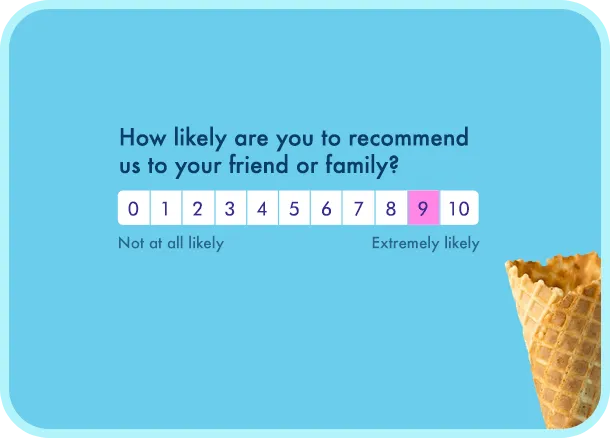
- Net Promoter Score (NPS): Measures overall loyalty and likelihood to recommend
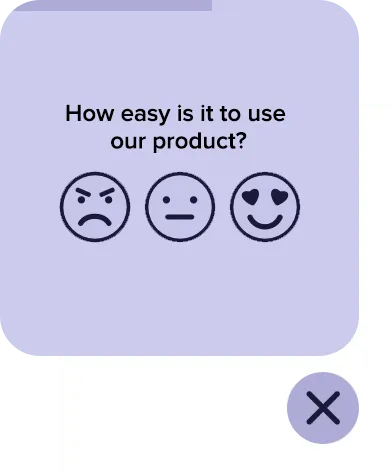
- Customer Effort Score (CES): Measures how easy it was to resolve an issue
- First Contact Resolution (FCR): Percentage of issues resolved on first contact
- Average Response Time: Speed of initial acknowledgment
For a complete guide with formulas, benchmarks, and implementation strategies, see our in-depth article on customer service metrics and KPIs.
How to Improve Customer Service: A Step-by-Step Framework
Improving customer service requires a systematic approach. Follow this framework to elevate your support quality:
Step 1: Establish a Baseline with Customer Feedback
Before making changes, understand your current performance. Deploy customer feedback surveys to measure CSAT, NPS, and CES. Analyze support tickets to identify common issues and pain points.
With Responsly for CX teams, you can automate feedback collection after every interaction and visualize trends over time.
Step 2: Train and Empower Your Team
Your support team is your frontline. Invest in:
- Product knowledge training: Agents should know your products inside and out.
- Soft skills development: Empathy, active listening, and de-escalation techniques.
- Decision-making authority: Empower agents to resolve issues without excessive escalation.
- Regular coaching: Use call recordings and ticket reviews for continuous improvement.
Step 3: Optimize Your Processes
Map your customer service workflows to identify bottlenecks:
- Reduce handoffs between departments
- Create clear escalation paths for complex issues
- Develop comprehensive knowledge bases for self-service
- Implement routing rules to match customers with the right agents
Step 4: Embrace Omnichannel Support
Customers expect to reach you on their preferred channel. Offer support across:
- Email and email surveys
- Phone and callback options
- Live chat and chatbots
- Social media platforms
- WhatsApp and messaging apps
- Self-service portals and FAQs
Ensure consistent quality and context continuity across all channels.
Step 5: Leverage Technology and Automation
Modern customer service tools can dramatically improve efficiency:
- Ticketing systems to track and prioritize issues
- CRM integration for customer context and history
- AI chatbots for common questions and after-hours support
- AI-powered surveys to collect and analyze feedback at scale
- Automated workflows for routing, escalation, and follow-up
Step 6: Close the Feedback Loop
Collecting feedback is only valuable if you act on it. Implement a closed-loop feedback process:
- Collect feedback through surveys
- Analyze responses to identify patterns
- Prioritize improvements based on impact
- Implement changes
- Communicate improvements to customers
- Measure results and iterate
Measuring Customer Service with Surveys
Surveys are the most direct way to understand customer perceptions of your service. Here is how to use different survey types effectively:
Post-Interaction Surveys
Send immediately after a support conversation to capture fresh impressions. Keep these brief, focusing on CSAT or CES. With website surveys or email surveys, you can automate this process.
Relationship Surveys
Conduct quarterly or biannual NPS surveys to measure overall loyalty and track trends. These provide strategic insights beyond individual interactions.
Transactional Surveys
Trigger post-purchase surveys after key moments like purchases, onboarding completion, or renewals to understand service quality at critical touchpoints.
Agent Performance Surveys
Ask customers to rate specific agents to identify top performers and those needing additional coaching. This data supports fair performance reviews and training prioritization.
How Responsly Helps Improve Customer Service
Responsly provides the tools you need to measure, analyze, and improve customer service continuously:
Multi-channel survey distribution: Collect feedback via email, SMS, WhatsApp, website widgets, and direct links.
Pre-built templates: Launch quickly with CSAT, NPS, and CES templates.
Real-time analytics: Monitor satisfaction trends and identify issues as they emerge with powerful dashboards.
AI-powered insights: Automatically analyze open-ended responses to surface themes and sentiment with Net Sentiment Score.
Integrations: Connect with your CRM, helpdesk, and other tools through native integrations—including Zendesk, Intercom, and Help Scout.
Automation: Trigger surveys based on events and automate follow-up workflows.
Start your free trial to see how Responsly can transform your customer service measurement.
Customer Service vs. Customer Experience: Understanding the Difference
While often used interchangeably, customer service and customer experience are distinct concepts:
| Aspect | Customer Service | Customer Experience |
|---|---|---|
| Scope | Specific support interactions | Entire customer journey |
| Nature | Reactive (responding to needs) | Proactive and reactive |
| Touchpoints | Support channels only | All brand touchpoints |
| Ownership | Support team | Entire organization |
| Measurement | CSAT, CES, FCR, ART | NPS, CLV, churn rate |
Excellent customer service is a critical component of great customer experience, but CX encompasses much more, including marketing, sales, product quality, and overall brand perception.
Common Customer Service Mistakes to Avoid
Even well-intentioned teams make these errors:
Slow response times: Customers expect quick replies. Aim to acknowledge all inquiries within hours, not days.
Lack of empathy: Scripted responses that ignore customer emotions frustrate and alienate.
Excessive transfers: Bouncing customers between departments signals dysfunction and wastes their time.
Not following up: Failing to confirm issue resolution leaves customers uncertain.
Ignoring feedback: Collecting surveys but not acting on them erodes trust.
Inconsistent experiences: Quality varying by channel or agent creates confusion and frustration.
When mistakes happen, how you recover matters. Effective customer service recovery can actually increase loyalty beyond pre-issue levels, a phenomenon known as the service recovery paradox.
Summary and Next Steps
Customer service is the support you provide when customers need help. Done well, it drives retention, referrals, and revenue. Done poorly, it accelerates churn and damages your brand.
To improve your customer service:
- Measure your baseline using CSAT, NPS, CES, and FCR
- Train and empower your support team
- Optimize processes to reduce friction and effort
- Embrace omnichannel support on customer-preferred channels
- Leverage technology to automate and scale
- Close the feedback loop by acting on survey insights
Ready to transform your customer service? Create a free Responsly account to start collecting customer feedback and measuring what matters. With ready-made templates and powerful analytics, you can identify improvement opportunities and track progress over time.
FAQ
What is customer service?
What are the key customer service metrics to track?
How can surveys improve customer service?
What is the difference between customer service and customer experience?
Tagged in
Last updated