Customer Effort Score
Find the friction before it costs you the customer
CES asks one thing: how hard was that? Effort predicts whether people stay better than delight does — and unlike satisfaction, it points straight at the step you need to fix.







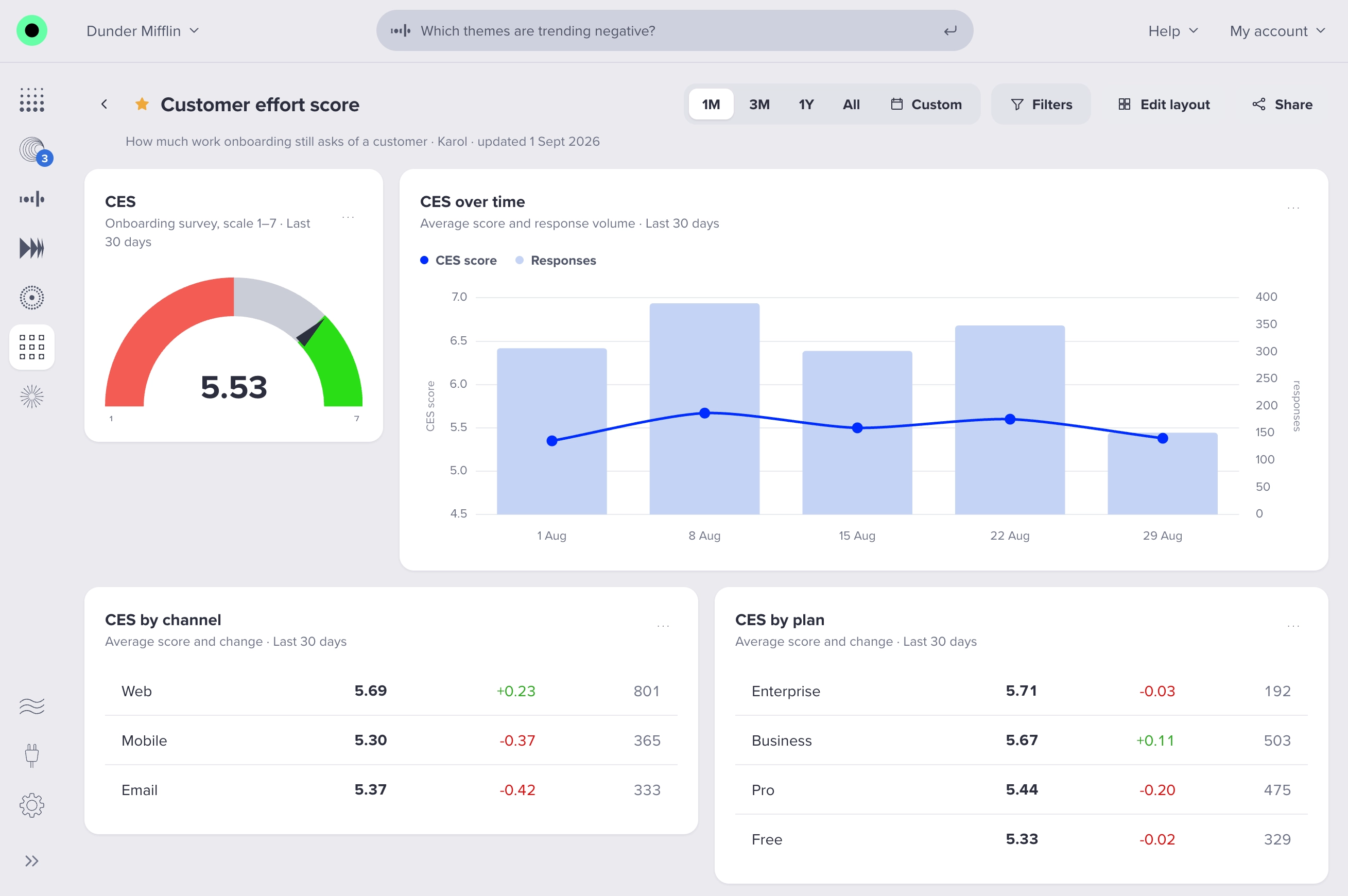
Effort is the cheapest churn signal you are not collecting
CES costs one question and points straight at the step to remove. That is what makes it the fastest metric to turn into a change somebody actually ships.
Catch friction before it becomes churn
High-effort interactions predict leaving far better than satisfaction does. A customer who got what they wanted but had to fight for it is a risk that CSAT will happily report as fine.
Get a named step, not a mood
Athena clusters the open answers so "had to repeat myself", "could not find it" and "waited too long" surface as separate, countable problems — each one a concrete thing to remove.
Cut the cost of serving people
Every avoidable contact, repeat ticket and escalation is effort the customer felt and you paid for. Removing the step usually shows up twice: in the score and in the support load.
Prove the fix worked
One question, one process, one change at a time. Trend per flow means an improvement is visible exactly where it was made, which is what gets the next fix funded.
Runs alongside CSAT and NPS — most programmes need all three, each fired at a different moment.
One question, and the step it points at
Ask the moment the process ends
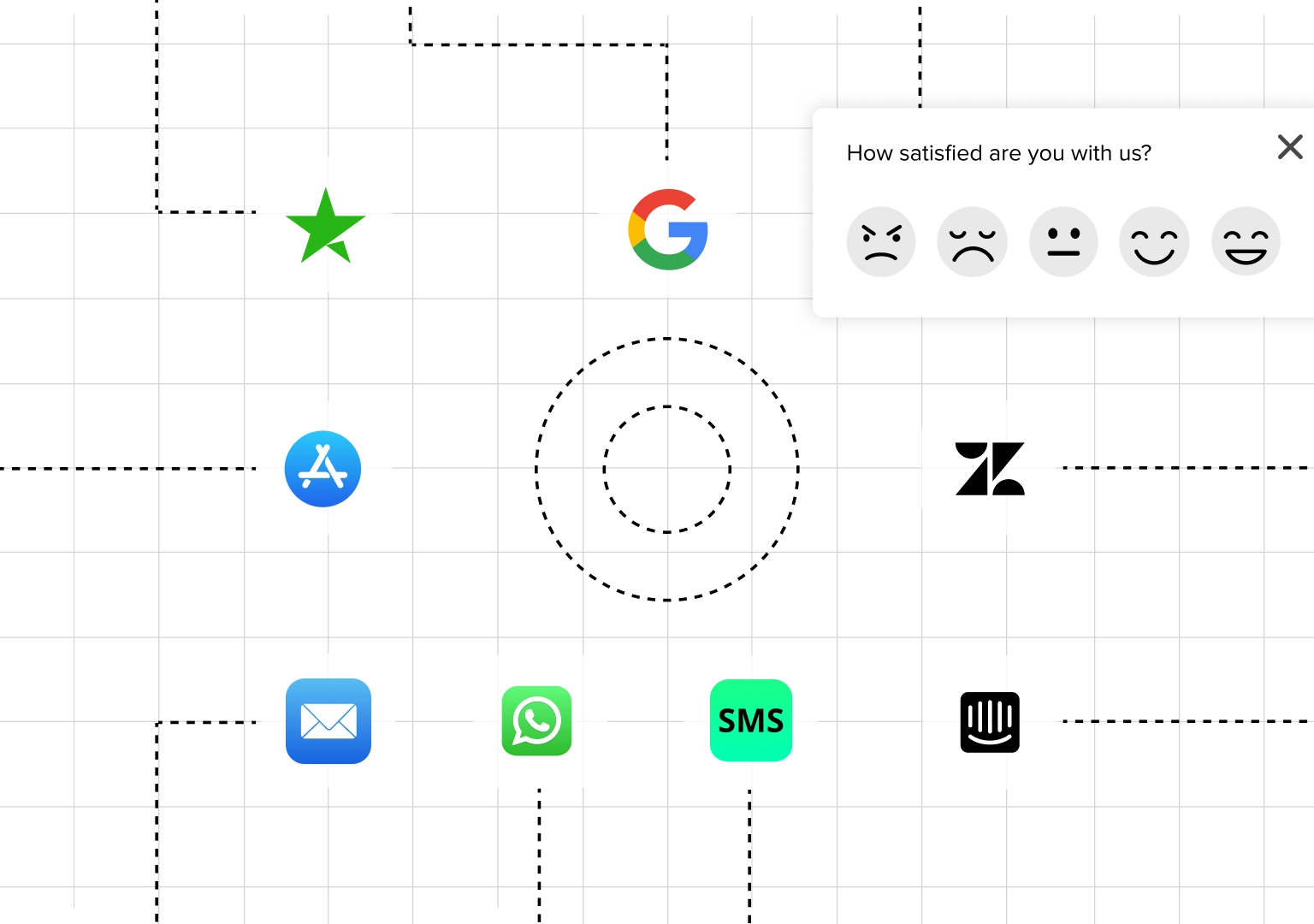
Effort is remembered precisely for hours and vaguely after that. Trigger the question on the closing event — resolved ticket, completed return, finished onboarding — wherever that interaction happened.
The 1–7 scale embedded in the email, answered without opening a page
In-app prompt fired by the event, not by a schedule
SMS, WhatsApp and links for processes that end outside the product
Turn a low rating into a named step
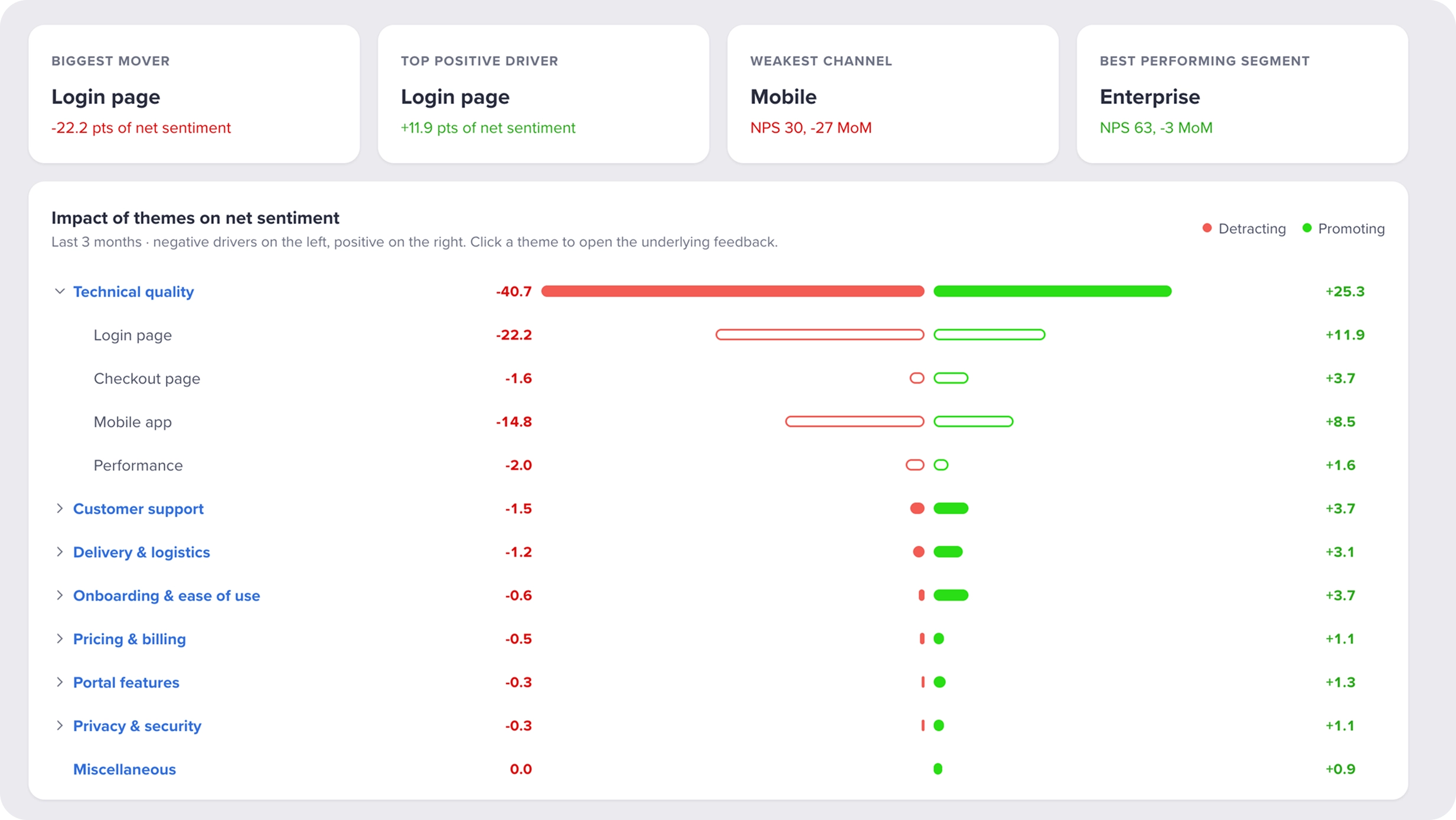
A 3 out of 7 is a complaint without a cause. Athena clusters the open answers so "had to repeat myself", "could not find it" and "waited too long" become separate, countable problems.
Recurring friction themes surfaced from free-text answers
Effort compared across channels, agents, issue types and flows
High-effort interactions matched against repeat contacts and churn
Ask Athena which step drives effort up and get the answer from your own data
Remove one step, then measure again
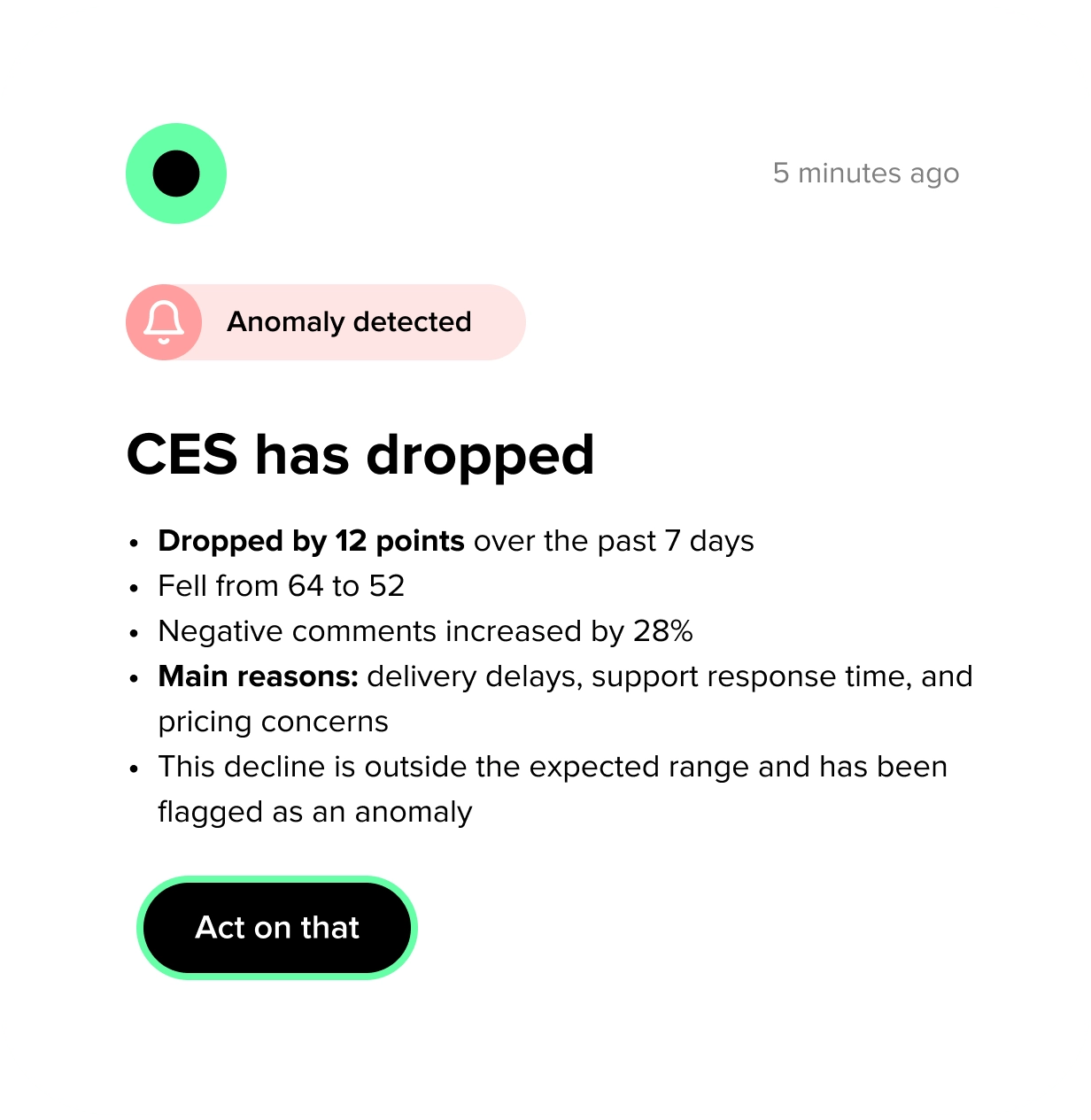
CES earns its keep as a before-and-after. Change a single thing in the flow, wait for a comparable sample and read the score — that is the loop that actually removes friction.
Alerts when effort rises on a specific flow or team
Scores pushed to the CRM and helpdesk next to the ticket that caused them
Trend per process, so an improvement is visible where it was made
Everything a CES programme needs
One question, asked at the right moment, connected to the process that produced the answer.
Trigger on completion
Fire CES when a ticket closes, a return is processed or onboarding finishes. Effort is remembered accurately for hours, not weeks.
One question, any channel
Email with the scale embedded, in-app prompt, SMS, WhatsApp or a link. A single-question survey belongs wherever the interaction ended.
Always ask why
A 3 out of 7 is a complaint without a cause. The open follow-up under the rating is where the fixable detail lives.
Themes that name the step
Athena clusters the open answers so "had to repeat myself", "could not find it" and "waited too long" surface as separate, countable problems.
Connect effort to outcomes
Push scores into your CRM or helpdesk and compare high-effort interactions with churn, repeat contacts and resolution time.
Compare flows, not averages
Segment by channel, agent, plan and issue type. CES is most useful as a ranking of processes, not as one company-wide number.
Built for a single tap
A one-question survey has to work on a phone in three seconds. Scales, buttons and follow-ups are designed and previewed for exactly that.
GDPR-ready by default
EU data residency, anonymous collection, retention rules and a signed DPA, so support feedback stays compliant.
We decrease the drop rate from our surveys by 40% after moving to Responsly

Alice Matyla
CX Manager


Enterprise grade security

GDPR compliant
We're compliant with General Data Protection Regulation (GDPR) that businesses in Europe must comply with when processing personal data.
CCPA compliant
USA state of California introduces California Consumer Privacy Act (CCPA) that defines how to handle users' personal data.
SSL & 2-Factor Authentication
All connections are protected by TLS 1.2 and AES with a 256-bit key. Enable 2-Factor Authentication for even better security.
SSO
Sign up users with Single Sign-On (SSO) and manage their access to your team. Set permissions and resource access.