Customer Satisfaction Score
Measure satisfaction where it actually happens
CSAT tells you whether a specific interaction landed. Ask right after the moment that matters, capture the reason in the same breath, and route low scores to the person who can fix them.







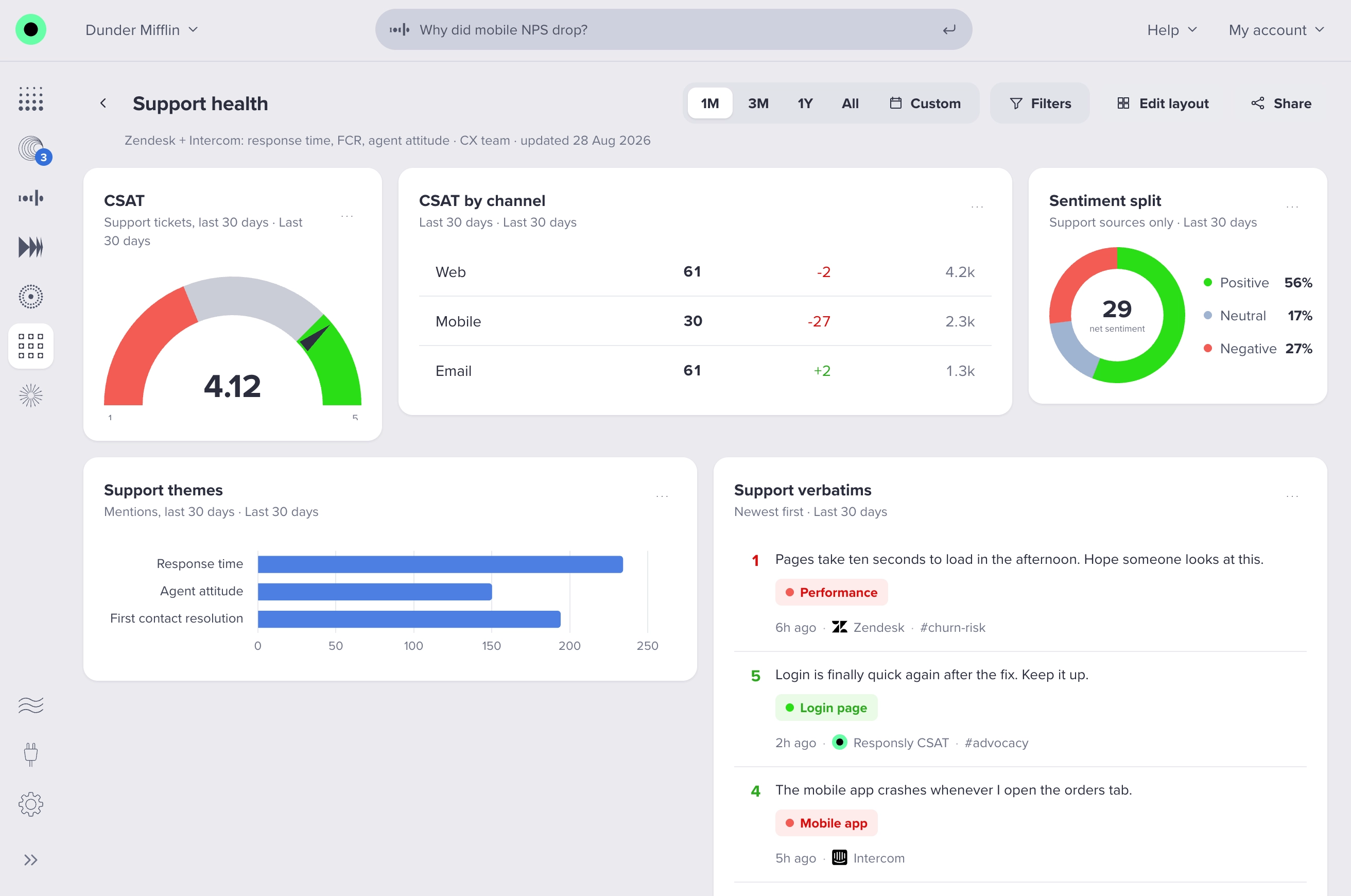
A score is the start. The point is knowing what to fix.
Most CSAT programmes stall at a number on a dashboard. The value shows up when the score comes with a cause, an owner and a deadline — and when you can prove the fix worked.
Find the problem in days, not quarters
Surveys fire on the event, so a drop shows up while the cause is still fresh and still fixable — not in a quarterly review where nobody remembers the week it started.
Know which fix is worth making
Athena reads the open-ended answers, groups them into themes and ranks them by how many points each one costs you. You stop arguing about which complaint is loudest and start working on the one that moves the number.
Save the customers you were about to lose
A low score routed to an owner within the hour is a conversation. The same score seen a month later is a cancellation. Closing the loop is the part that shows up in retention.
Give every team the same number
Support, product and operations argue less when they are looking at one score, broken down by the segment each of them owns, instead of three conflicting reports.
Runs alongside CES and NPS — most programmes need all three, each fired at a different moment.
From the moment it happens to the fix that follows
Ask while the interaction is still fresh
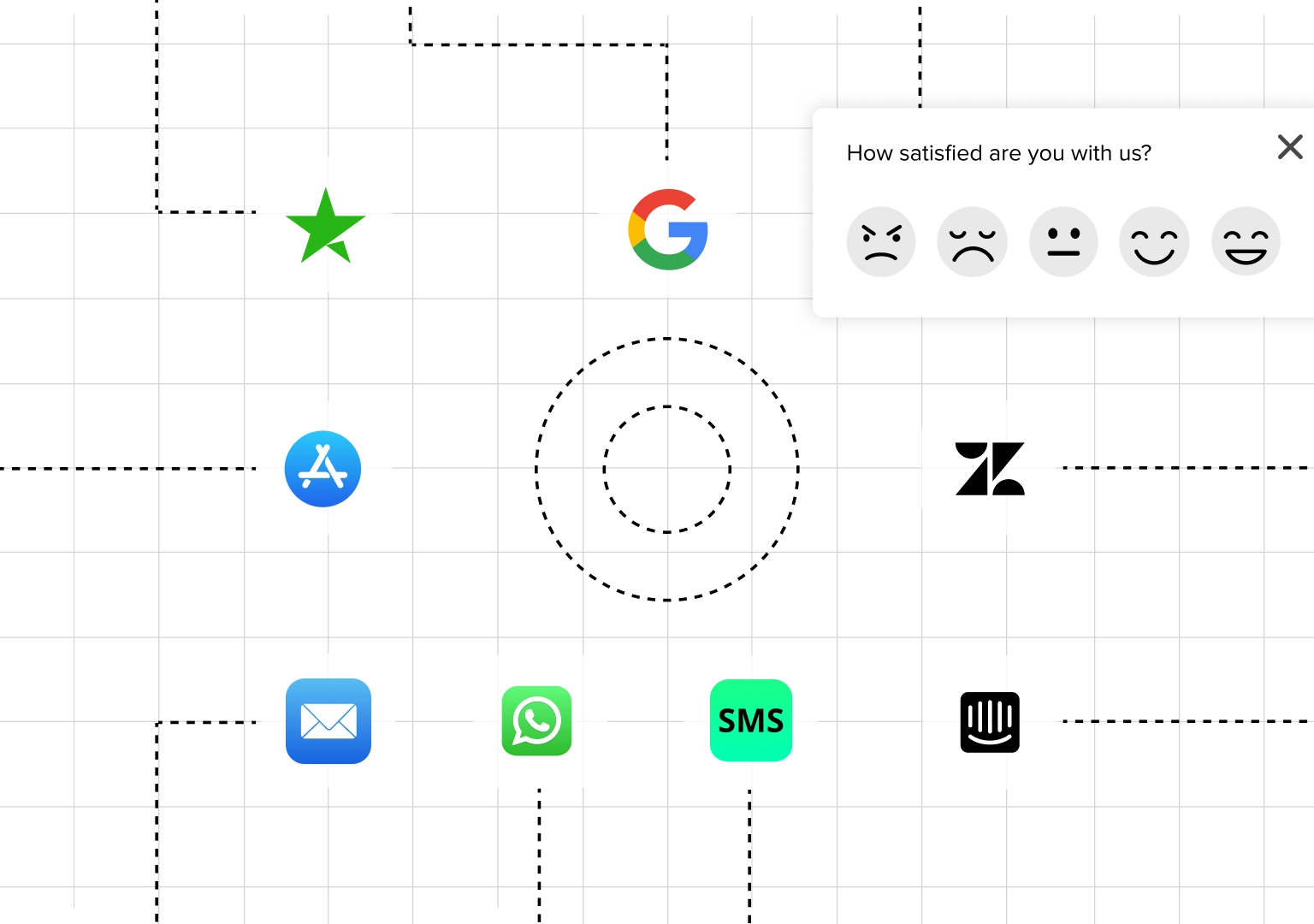
A CSAT survey is only as good as its timing. Fire it on the event — ticket closed, order delivered, onboarding finished — on the channel where that interaction actually took place.
Rating embedded straight in the email, so answering takes one click
In-app and on-site widgets triggered by a user action
SMS, WhatsApp, QR codes and shareable links from the same survey
See what is pulling the score down
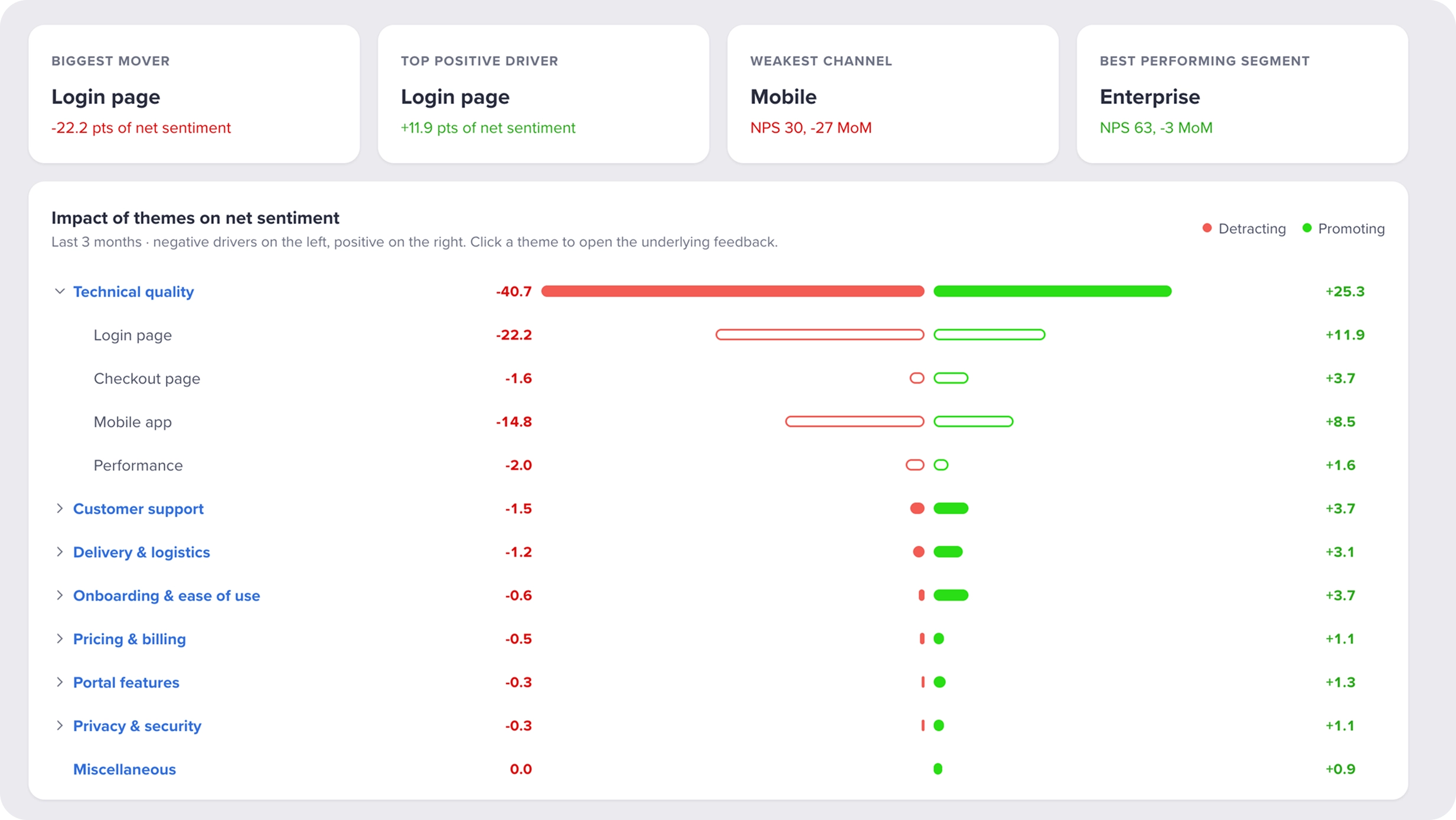
The average hides the answer. Athena reads the open-ended comments, groups them into recurring themes and shows which of them actually moves your CSAT — no manual tagging.
Themes and sentiment extracted from free-text answers
Impact view: which topic costs you the most points
Breakdown by channel, plan, region, agent and lifecycle stage
Ask Athena a question in plain language and get it answered from your own responses
Close the loop while it still matters
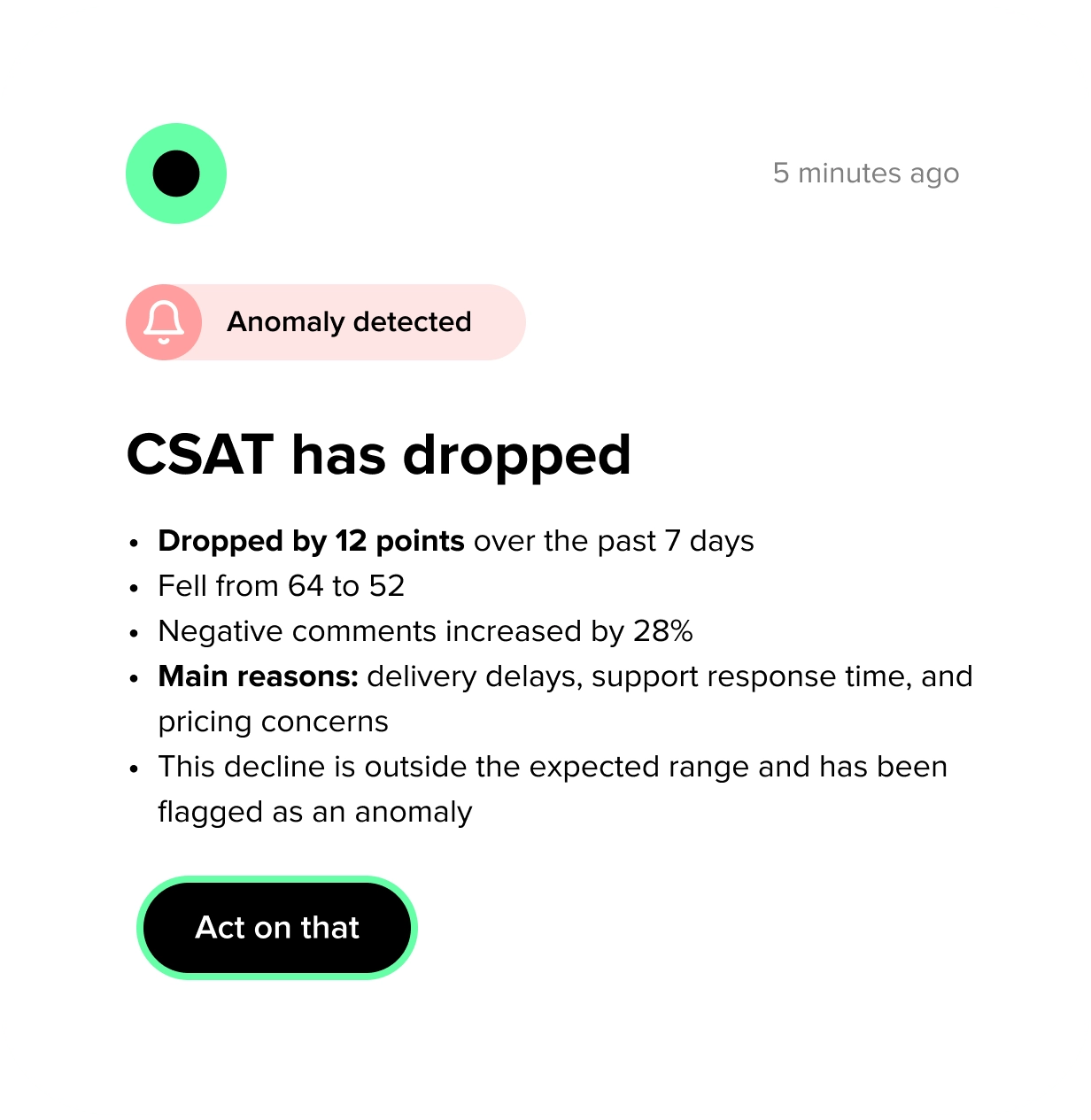
A low rating is a scheduled churn unless somebody answers it. Route detractor responses to the right owner, set a contact deadline and track whether the follow-up actually happened.
Alerts on a score drop, sent to Slack, email or your helpdesk
Responses pushed into the CRM against the right customer record
Follow-up tracking, so a closed loop is a fact and not an intention
Everything a CSAT programme needs
Collection, context and follow-up in one place, so the score does not end its life in a spreadsheet.
Ask on any channel
Email with the rating embedded in the message, in-app and on-site widgets, SMS, WhatsApp, QR codes and links — one survey, wherever your customer already is.
Trigger on the event
Fire the survey when the ticket closes, the order is delivered or the feature is used. Timing moves response rates more than any rewrite of the question.
Capture the reason
One optional open question under the score turns a number into a cause. That answer is what makes the metric actionable.
Themes and sentiment
Athena groups open-ended answers into recurring themes, scores sentiment and flags what is driving the number down — without manual tagging.
Close the loop
Route a low score to the right owner through your CRM or helpdesk, set a response deadline and track whether the follow-up actually happened.
Segment before you conclude
Break the score down by plan, channel, region, agent or lifecycle stage. A stable average often hides one segment in trouble.
Built for a phone screen
Most responses arrive on mobile. Rating scales, matrices and follow-ups are previewed and tested for small screens before you send.
GDPR-ready by default
EU data residency, anonymous collection, retention rules and a signed DPA — so a satisfaction programme does not become a compliance project.
Responsly platform help us get to know our customers better and increase the quality of our services.

Aneta Pezda
Internal Communication Specialist


Enterprise grade security

GDPR compliant
We're compliant with General Data Protection Regulation (GDPR) that businesses in Europe must comply with when processing personal data.
CCPA compliant
USA state of California introduces California Consumer Privacy Act (CCPA) that defines how to handle users' personal data.
SSL & 2-Factor Authentication
All connections are protected by TLS 1.2 and AES with a 256-bit key. Enable 2-Factor Authentication for even better security.
SSO
Sign up users with Single Sign-On (SSO) and manage their access to your team. Set permissions and resource access.