Employee Net Promoter Score
Measure eNPS continuously, team by team
eNPS asks one thing: would your people recommend working here? Ask it anonymously on a steady rhythm, break the score down by team, and let Athena read the comments — so you see disengagement while it is still fixable, not in the exit interview.







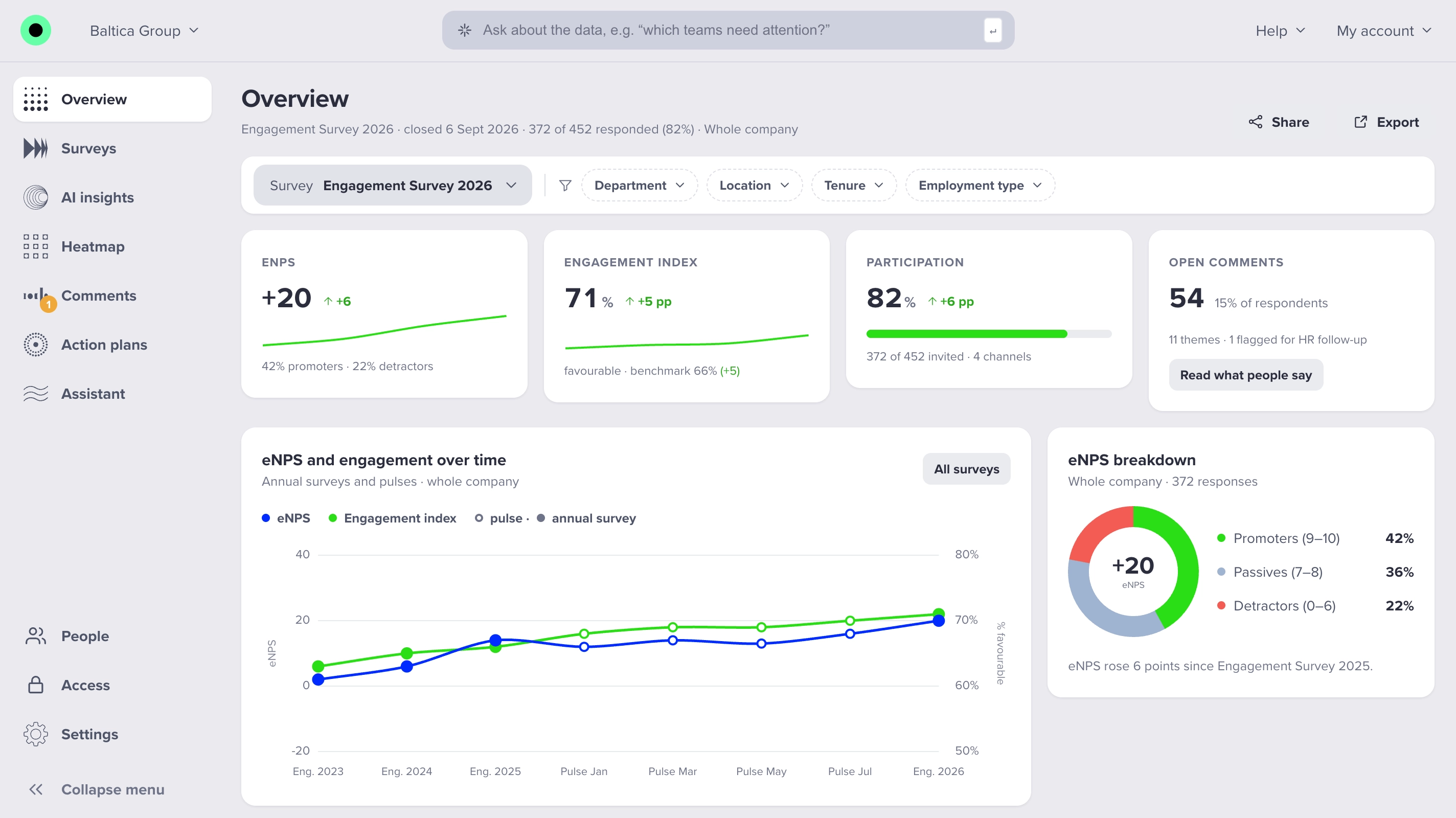
A score is easy to collect. Trust is what makes it worth reading.
Most eNPS programmes fail quietly: answers turn cautious, response rates slide, and the number stops meaning anything. The value shows up when people trust the survey, the score comes with a reason, and managers know what to change.
Get answers people actually mean
eNPS only measures loyalty if employees feel safe giving a 3. Invitations can be sent without tracking who answered, and Athena strips names and contact details from comments before analysis.
Catch disengagement while it is fixable
An annual survey reports what people felt last spring. A quarterly or monthly eNPS pulse shows the drop in the round it starts — while the team, the manager and the cause are still the same.
Know what is behind the number
The score tells you that something moved. Athena groups the open answers into themes — workload, management, pay, growth — and measures their sentiment, so the discussion starts from causes instead of guesses.
Show that answering changes something
Share the result, commit to one or two actions, then ask the same question again. A trend that moves after a visible change is what keeps people answering in the next round.
Built on the same method as NPS for customers, and runs in the same account as CSAT and CES. New to the metric? Start with our guide to Employee Net Promoter Score.
From one question to a team that knows what to change
Ask anonymously, on a rhythm people can keep up with
eNPS only means something if people feel safe giving a low score. Send the 0–10 question with one open follow-up without tying answers to names, schedule it where your people already are, and keep the wording identical so every round stays comparable.
Anonymous email invitations that are not tied to the recipient’s address
Recurring distribution to Microsoft Teams, plus links and QR codes for people without a company inbox
Automatic reminders for everyone who has not answered yet
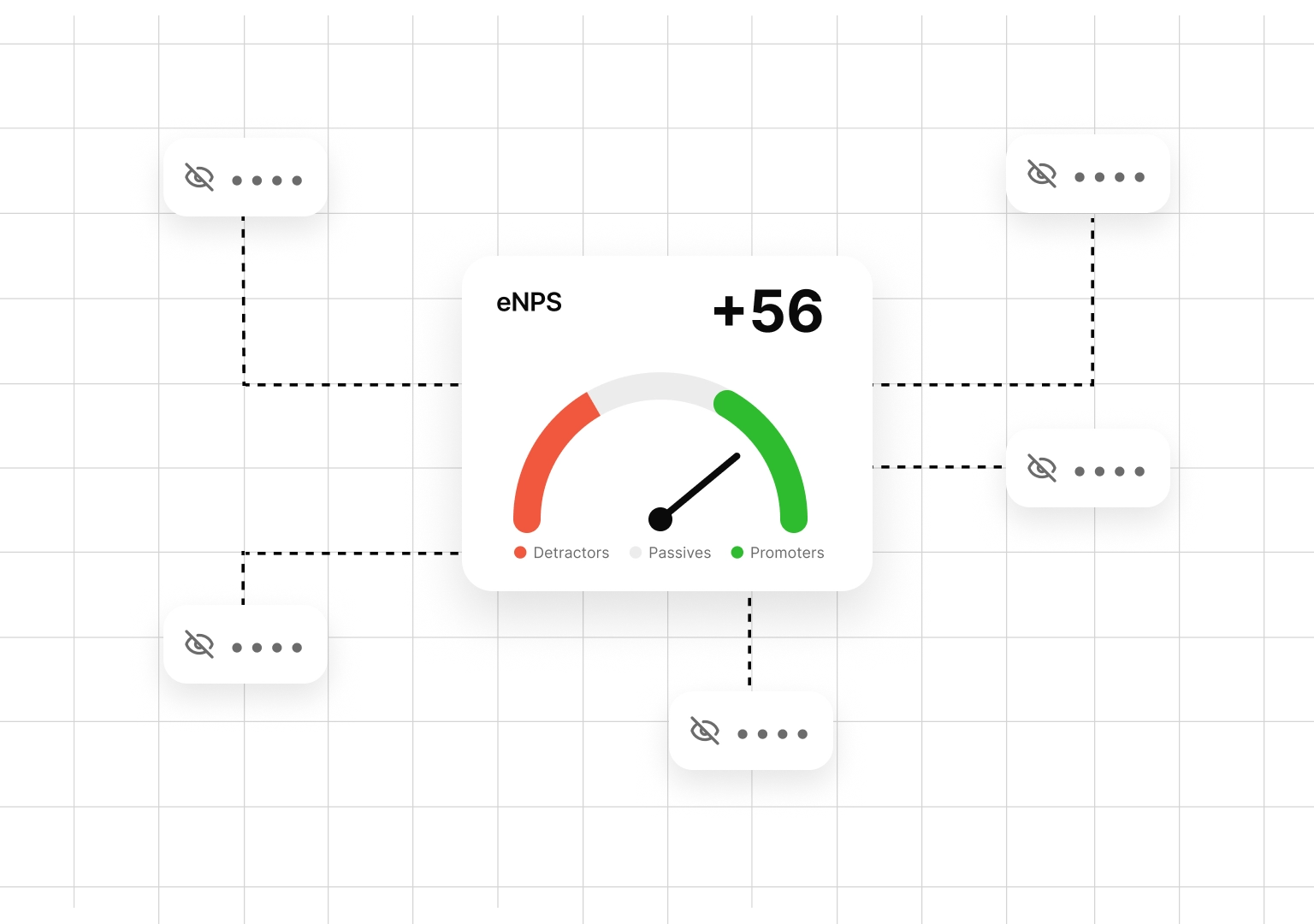
See which team is drifting, and why
A healthy company average can hide one department in trouble. Break the score down by team, location or tenure, and let Athena turn hundreds of comments into themes you can put in front of leadership.
Department, location or tenure passed in as hidden variables, without asking anyone to identify themselves
Themes and sentiment from open-ended answers, with names and contact details redacted before analysis
Trend per segment, so a drop shows up in the round it starts
Ask Athena a question in plain language and get it answered from your own responses
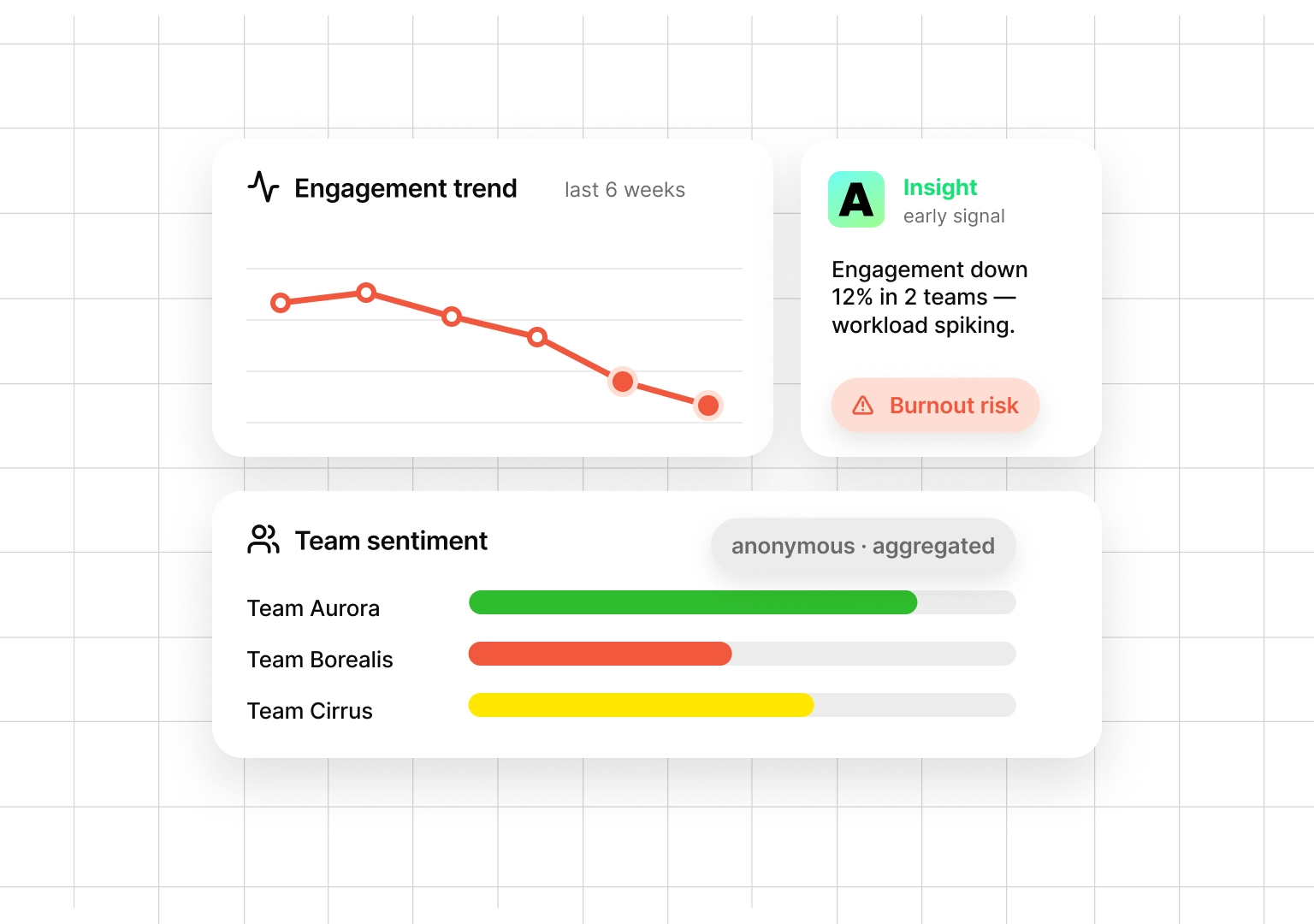
Turn the result into a change people can see
Employees stop answering when nothing happens. Share the results with the managers who own them, agree on one or two actions per team, and check them against the next round.
Alerts in Slack, Microsoft Teams or email when the score breaks its usual pattern
Live dashboards shared as read-only links with leadership and managers
Results passed on to the rest of your HR stack through webhooks, API, Zapier, Make or n8n
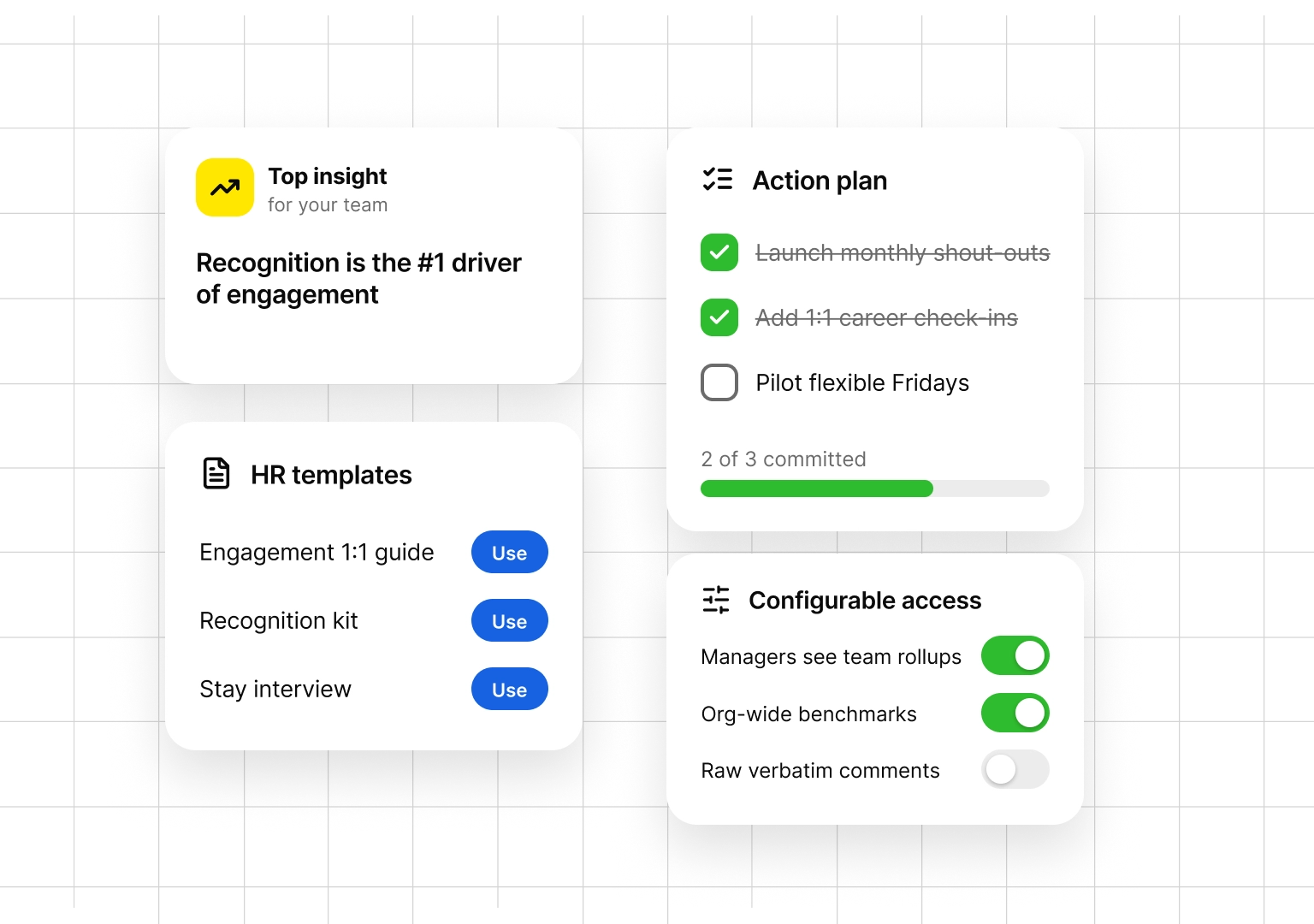
Everything an eNPS programme needs
Trust, a steady rhythm and a way to act, so the score becomes a conversation and not a slide.
Anonymous by design
Send invitations without tracking who answered, or share a link. Keep reported groups large enough that nobody can be singled out — honest detractors are the whole point.
Pulse on a schedule
Run eNPS monthly or quarterly with recurring distribution and automatic reminders, and keep the question identical so every round is comparable.
Team-level breakdowns
Pass department, location or tenure as hidden variables and filter the score by each. A stable company average often hides one team in trouble.
Always ask why
One optional open question under the 0–10 scale turns a score into a reason. That answer is where the fixable detail lives.
Comments read by Athena
Athena groups open answers into themes, measures sentiment and redacts personal details before analysis — no manual tagging of hundreds of comments.
Alerts when the score moves
An unusual drop is flagged and sent to Slack, Microsoft Teams or email, so HR hears about it the same week instead of at the next review.
Connected to your HR stack
Distribute through Microsoft Teams or Slack, then pass results on with webhooks, the API, Zapier, Make or n8n.
GDPR-ready by default
GDPR support, a DPA ready to sign, AES-256 encryption at rest, role-based permissions, 2FA and SSO on Enterprise — employee data deserves the same care as customer data.
Thanks to the Responsly platform, we can conduct surveys among our employees in an extremely simple and effective way.

Sarah M.
Director at Man Trucks


Enterprise grade security

GDPR compliant
We're compliant with General Data Protection Regulation (GDPR) that businesses in Europe must comply with when processing personal data.
CCPA compliant
USA state of California introduces California Consumer Privacy Act (CCPA) that defines how to handle users' personal data.
SSL & 2-Factor Authentication
All connections are protected by TLS 1.2 and AES with a 256-bit key. Enable 2-Factor Authentication for even better security.
SSO
Sign up users with Single Sign-On (SSO) and manage their access to your team. Set permissions and resource access.