Multiple choice
Closed‑ended questions are question types where respondents choose from a predefined set of answers, such as yes / no or a list of multiple‑choice options.
They are typically used to collect quantitative data.
There are several versions of closed questions:
- simple yes / no or correct / incorrect (dichotomous questions),
- classic multiple‑choice questions with a fixed list of options.
Choice questions are one of the most popular question types (next to text questions) used in forms, surveys, quizzes and tests.
They also have many additional options (available in the panel on the right), for example:
- Multiple answers – allow selecting more than one answer, with optional min/max limits.
- Other option – lets the respondent type their own answer.
- Inline answers – display answers next to each other.
- Random answer order – shuffles the order of answers each time.
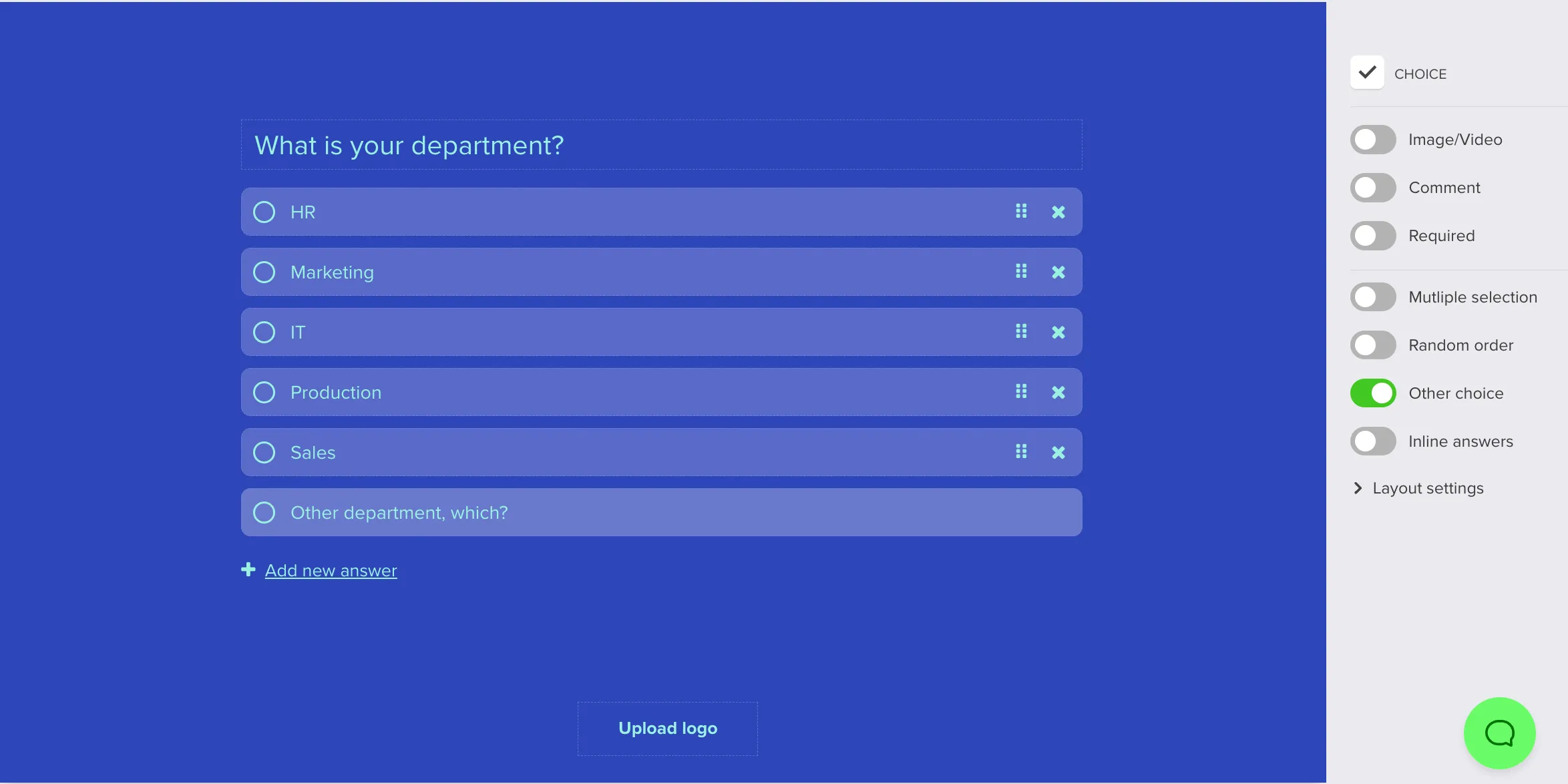
Choice question with open‑ended option “Other”
The difference between open‑ended and closed‑ended questions lies in the type of data you collect:
- closed questions → structured data for statistics and general conclusions,
- open questions → free‑text answers where you look for themes and patterns.
Choice (closed) questions are very common, but you’ll often want to let respondents clarify or extend their answer.
To allow that:
- enable the Other choice option in the right‑hand panel,
- (optionally) add a label so respondents know where to type their own answer.
Closed‑ended question examples
There are many ways to format closed questions. Below are the most common types.
Multiple‑choice questions
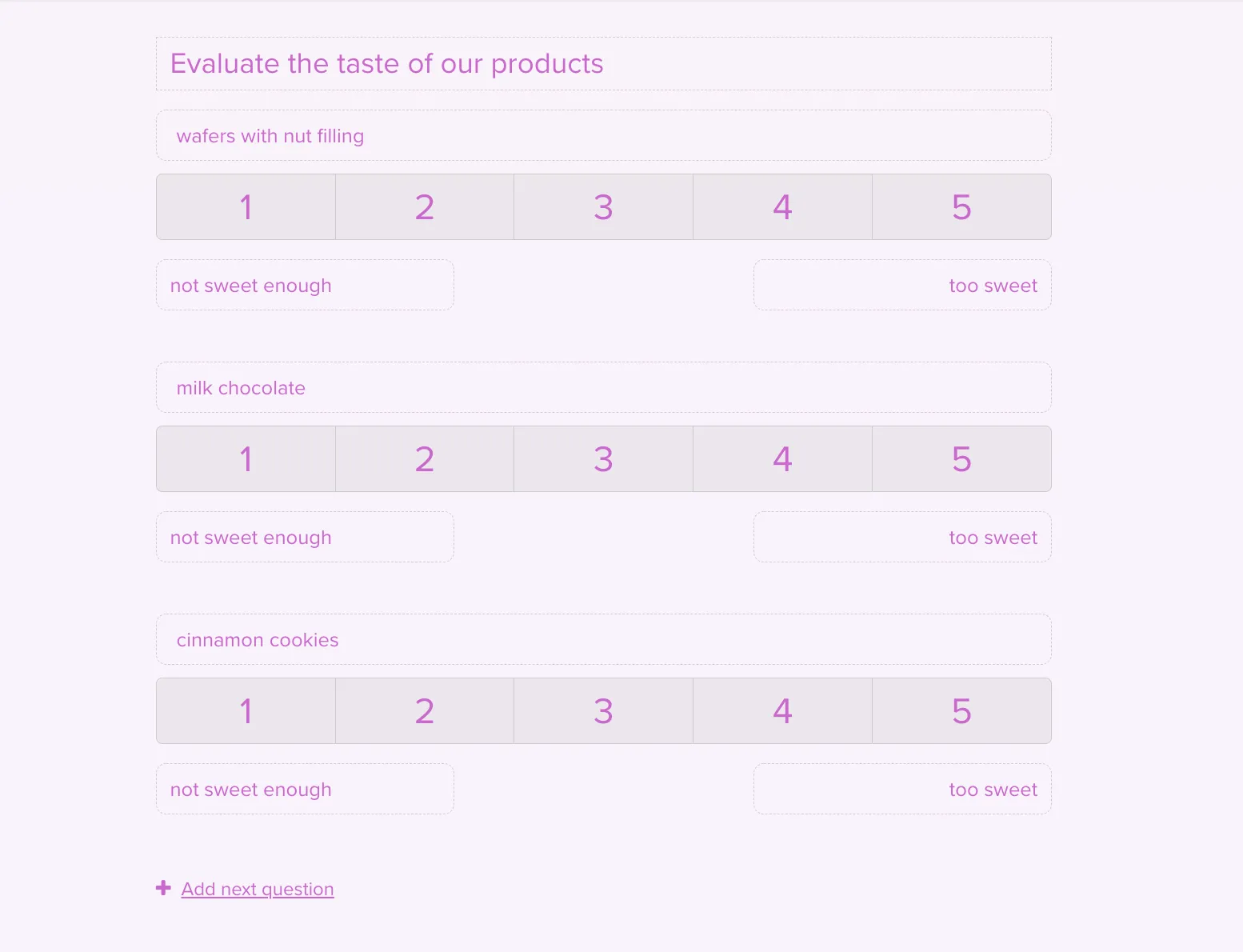
Multiple‑choice questions can be designed in different ways. They often use scales, which assign a numeric value to each option.
Examples:
Checklist
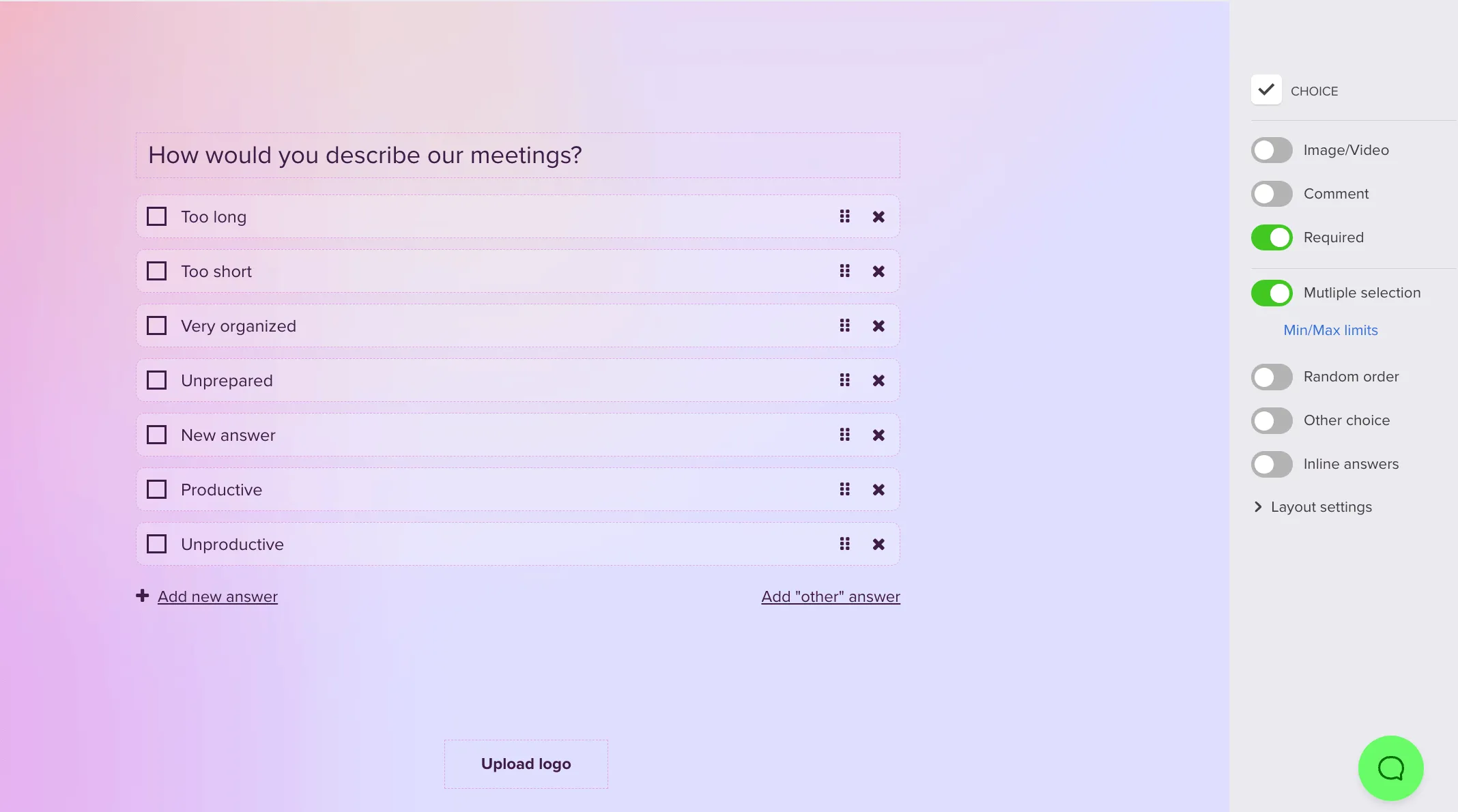
Respondents select all options that apply from a list.
You can then count how many participants chose each option.
Likert scale
The Likert scale is most often used to measure attitudes towards a specific topic.
Respondents rate how strongly they agree or disagree with a statement.
Grading scale
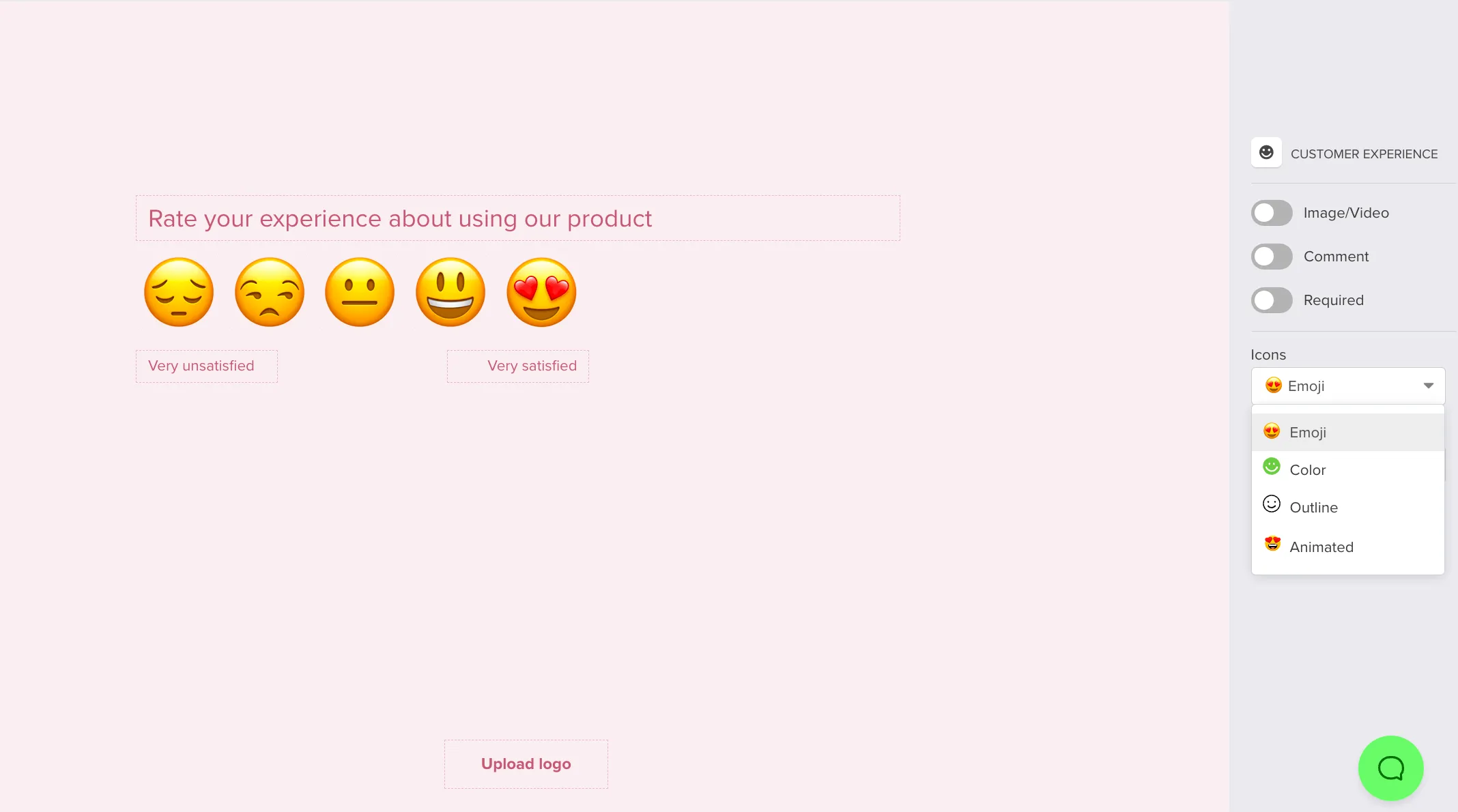
Here respondents rate their feelings on a numeric scale (e.g. 1–5).
This is a common pattern in reviews.
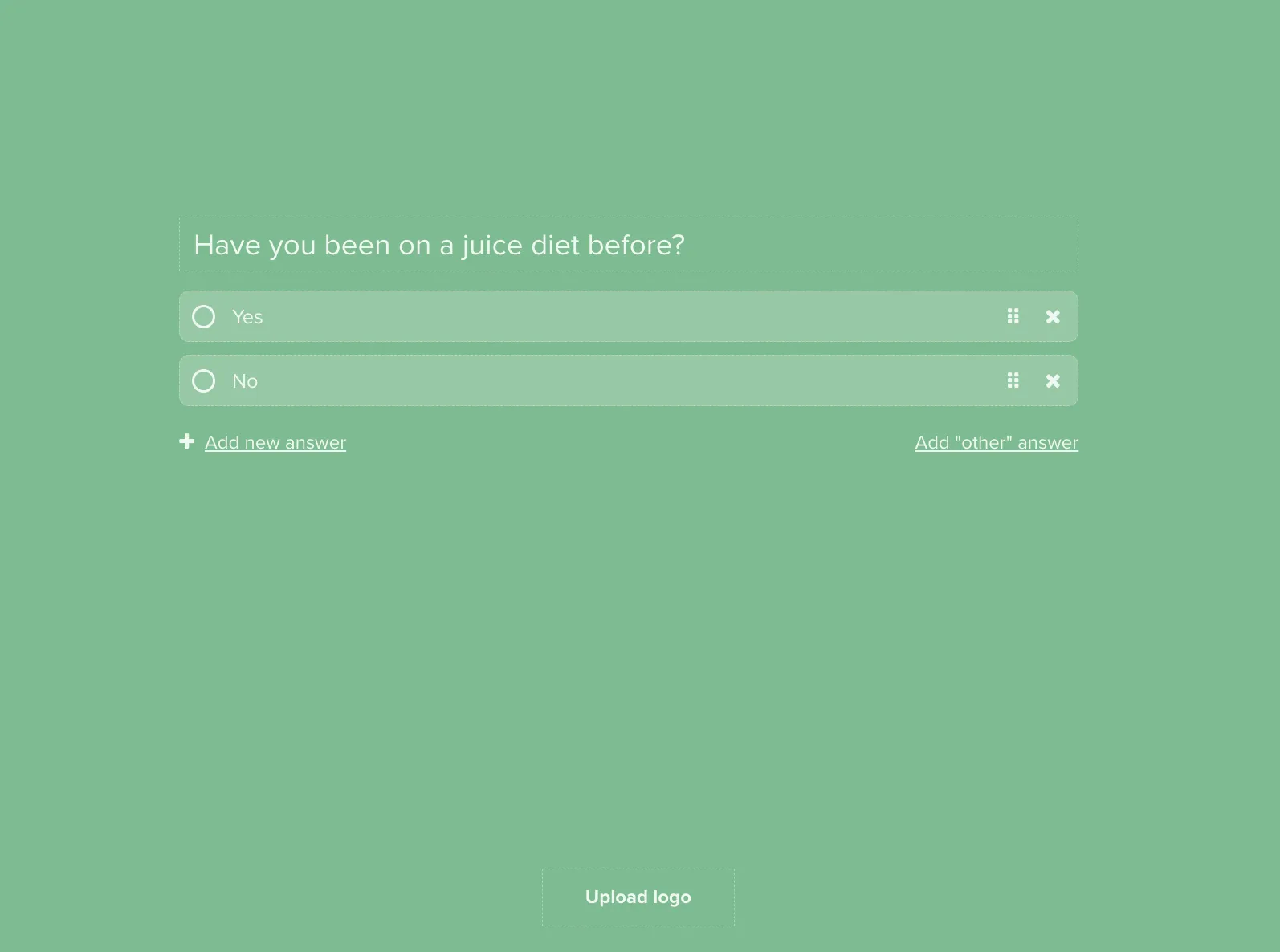
Dichotomous questions
Dichotomous questions offer exactly two options – for example yes / no or true / false.
They are very fast to answer, but respondents may feel their choice is too limited.
Why use closed questions?
Closed questions are easy for respondents to answer and easy for you to analyse:
- limited options mean less cognitive load,
- simple wording makes questions clear,
- responses are consistent, which simplifies reporting and visualisation.