Greeting the respondent

Hidden variables let you reuse data you already have—often a name, segment, or campaign code—inside survey copy. Pass values in the survey URL, then insert variables into the welcome screen, questions, or end page so respondents see a personalized greeting or thank-you without retyping information you know from your CRM, e-mail tool, or invite link.

For a broader overview of fields and use cases, see What is hidden variables?. To polish welcome copy, use Text formatting and Survey introduction ideas alongside variables.

Add hidden variables and greet by name

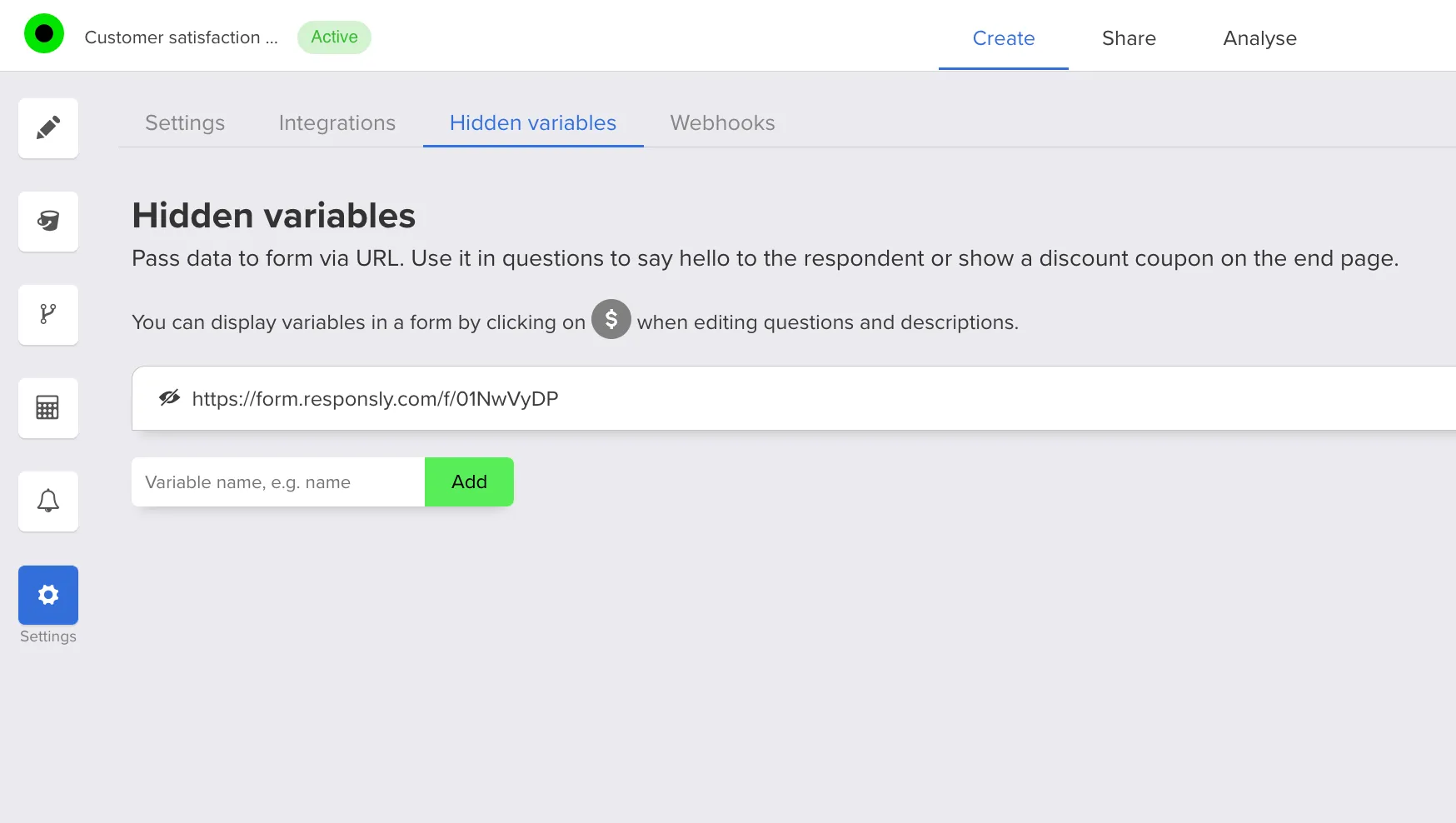
  1. Go to Settings → Hidden variables.

    Add hidden variables in survey settings

  2. Add a hidden variable—for example name—and click Add. Responsly shows a URL template that already includes the new parameter.
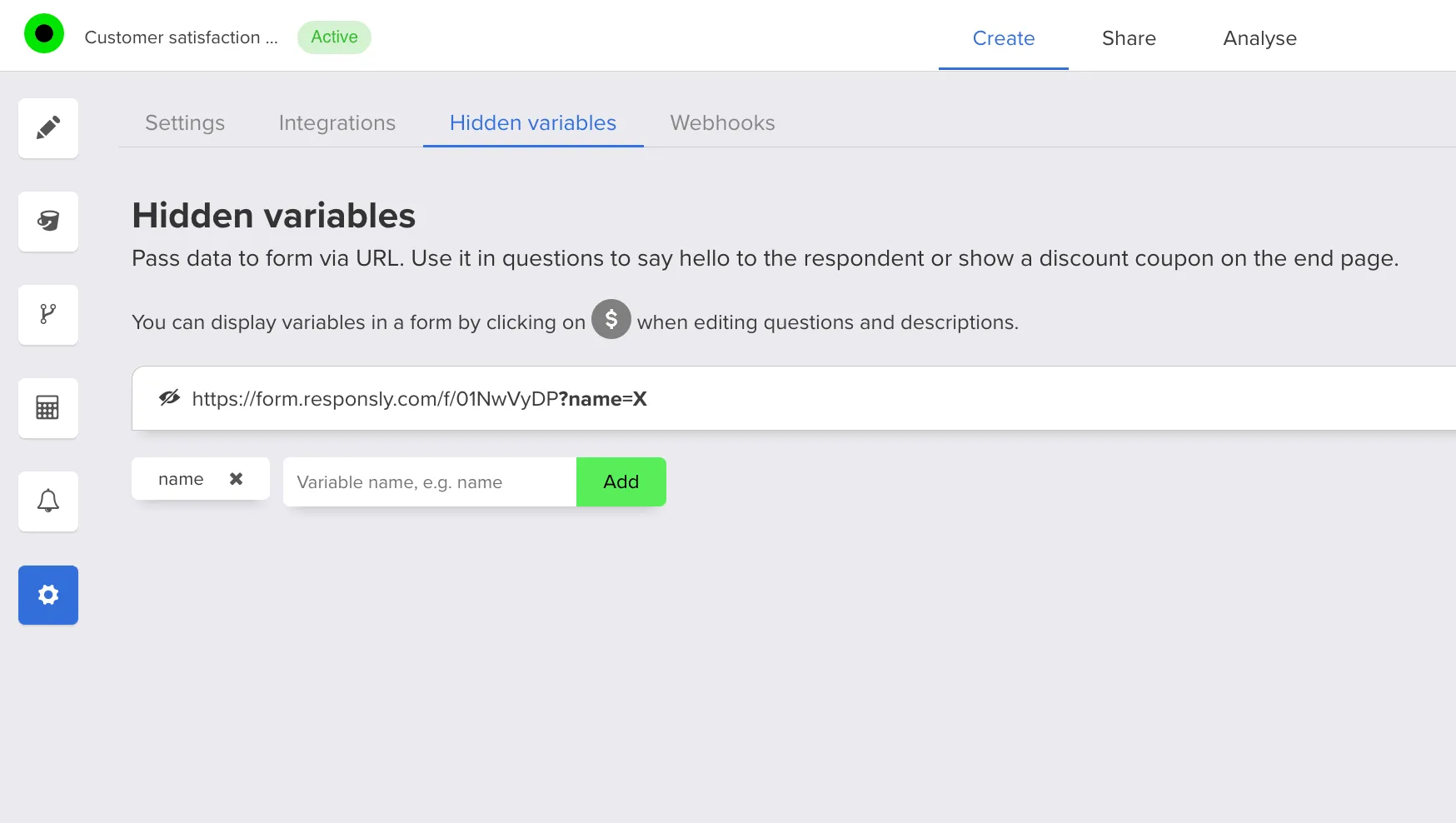
    Hidden variable added with URL template

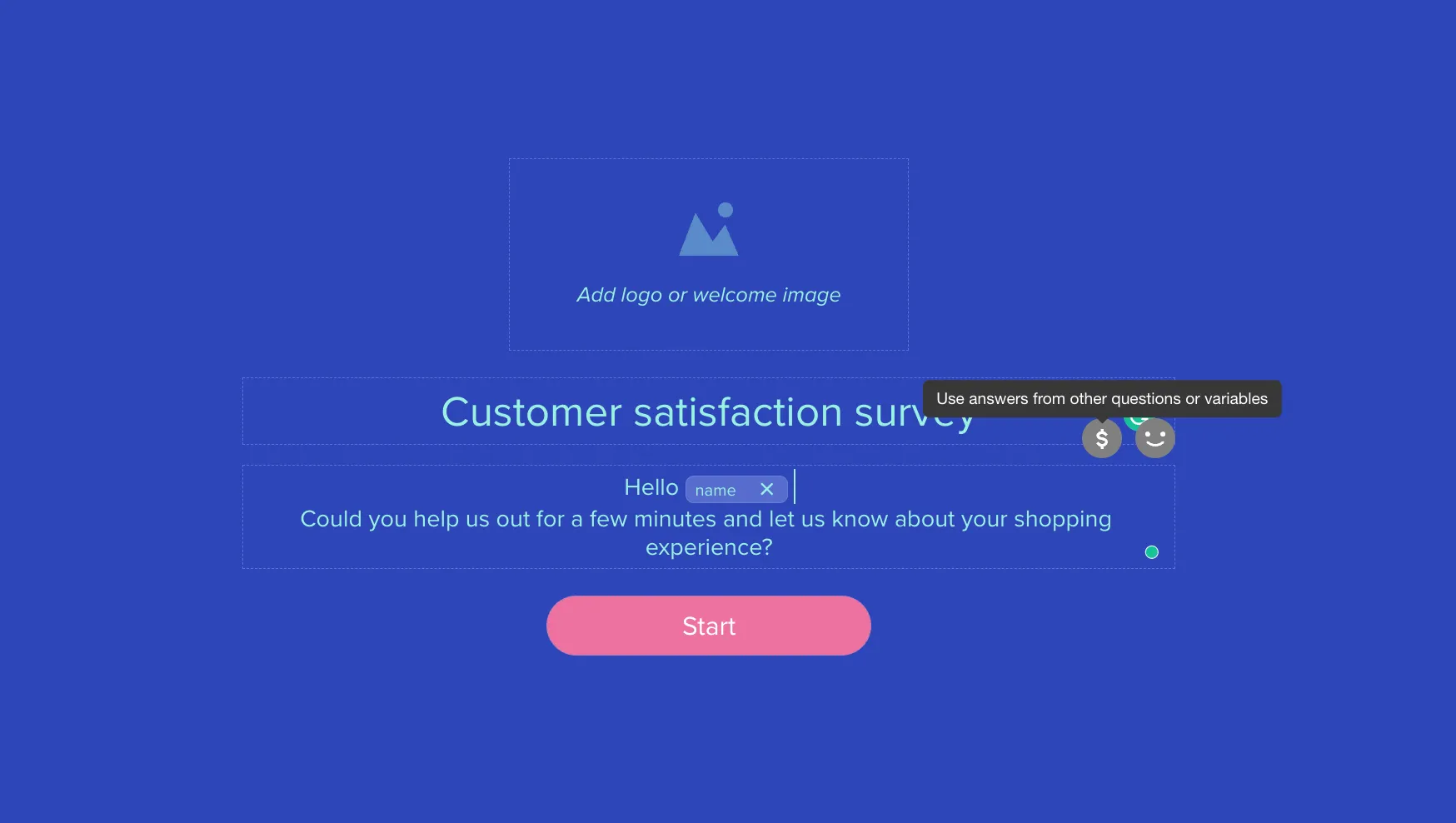
  3. While editing questions or descriptions (including your opening screen), click the $ icon to insert variables into the text.

    Insert a hidden variable from the editor toolbar

  4. Return to the Hidden variables tab and copy the survey URL that includes the variable name.

    Copy share URL with hidden variable parameter

    The template usually shows a placeholder such as X. In each link you send, replace X with the real value—here, the respondent’s name—so the form resolves it on load.

  5. The respondent then sees their name on the first page (or wherever you placed the variable).
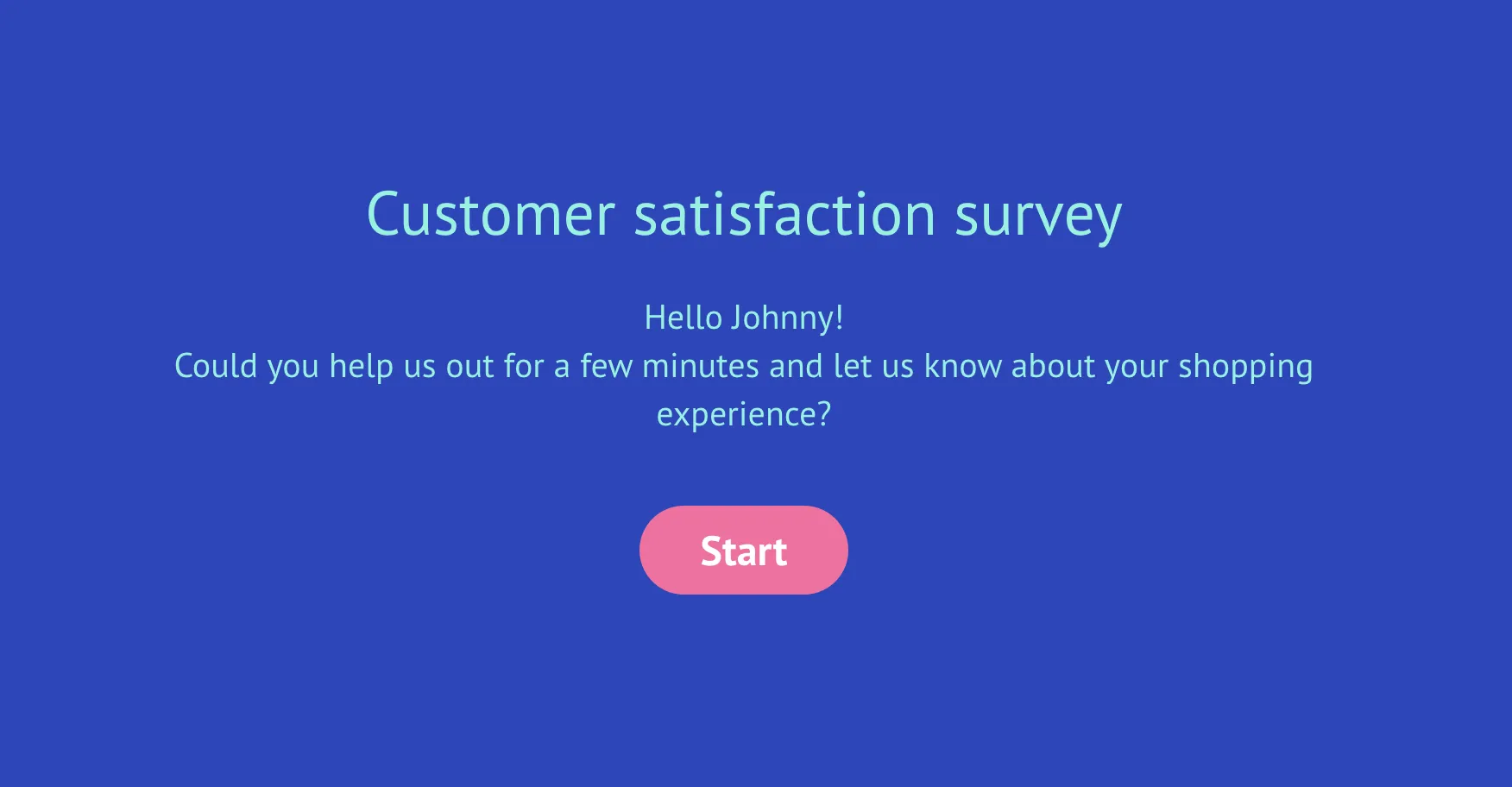
    Survey welcome showing value from URL

  6. The value from the URL is saved with the submission, so you can use it in Analysis, filters, or exports together with the rest of the answers.

FAQ

How do I show the respondent’s name on the first page of a Responsly survey?

Create a hidden variable (for example name), build the share URL that includes it, replace the placeholder with each person’s value, and insert the variable into your welcome or question text using the $ picker in the editor.

What does the X in the hidden-variable URL mean?

It is a placeholder in the generated link template. When you send the survey, replace X with the real value—for example the respondent’s name—so the form can display and store that value.

Are hidden variable values saved with the submission?

Yes. Values passed in the URL are stored alongside answers so you can filter, analyze, or export them with the rest of the response.

Need help or have more questions?

Responsly platform helps us to manage customer satisfaction and communication within our organization.

Alicja Zborowska, Administration Specialist

Red bull
Bayer

We automated the product experience management process.

KraftHeinz

Managing customer experience is made easy with Responsly.

Danone

Our suppliers are surveyed quickly and efficiently.

Feel the Responsly advantage over other products

Talk to us!