Run surveys in multiple languages and analyse every submission in one place—without duplicating projects per country. Add translations for each locale, let people switch language or land on the right language automatically, then review results with language filters when you segment.
Respondents can use a language dropdown, and Responsly can auto-detect the browser language when a matching translation exists.
How does survey translation work?
Responsly supports flexible translation workflows: respondents pick a language on the form or you send unique links per language so the correct locale opens immediately—helpful when you share survey links to different audiences.
There are 3 ways of translating the survey
- Automatic translations — generate draft translations in seconds, then review wording before you publish. Machine output should always be checked for tone, legal precision, and brand terms.
- Manual translations — type or paste translations for questions, answers, and UI strings directly in Responsly for full control.
- Translation files — download the CSV / Excel template of labels, send it to translators, and upload the completed file.
Automated survey translation setup
Imagine you want a global survey in English, Spanish, and French. Typical steps:
- Create your survey in your default language (for example English).
- Open translation settings: sign in to Responsly, open the survey, then go to Settings → Translations and add the languages you need.
- Run automatic translation if you want a fast first pass, then review and save each language.
- Add more languages as needed and use Preview to QA each locale before launch.
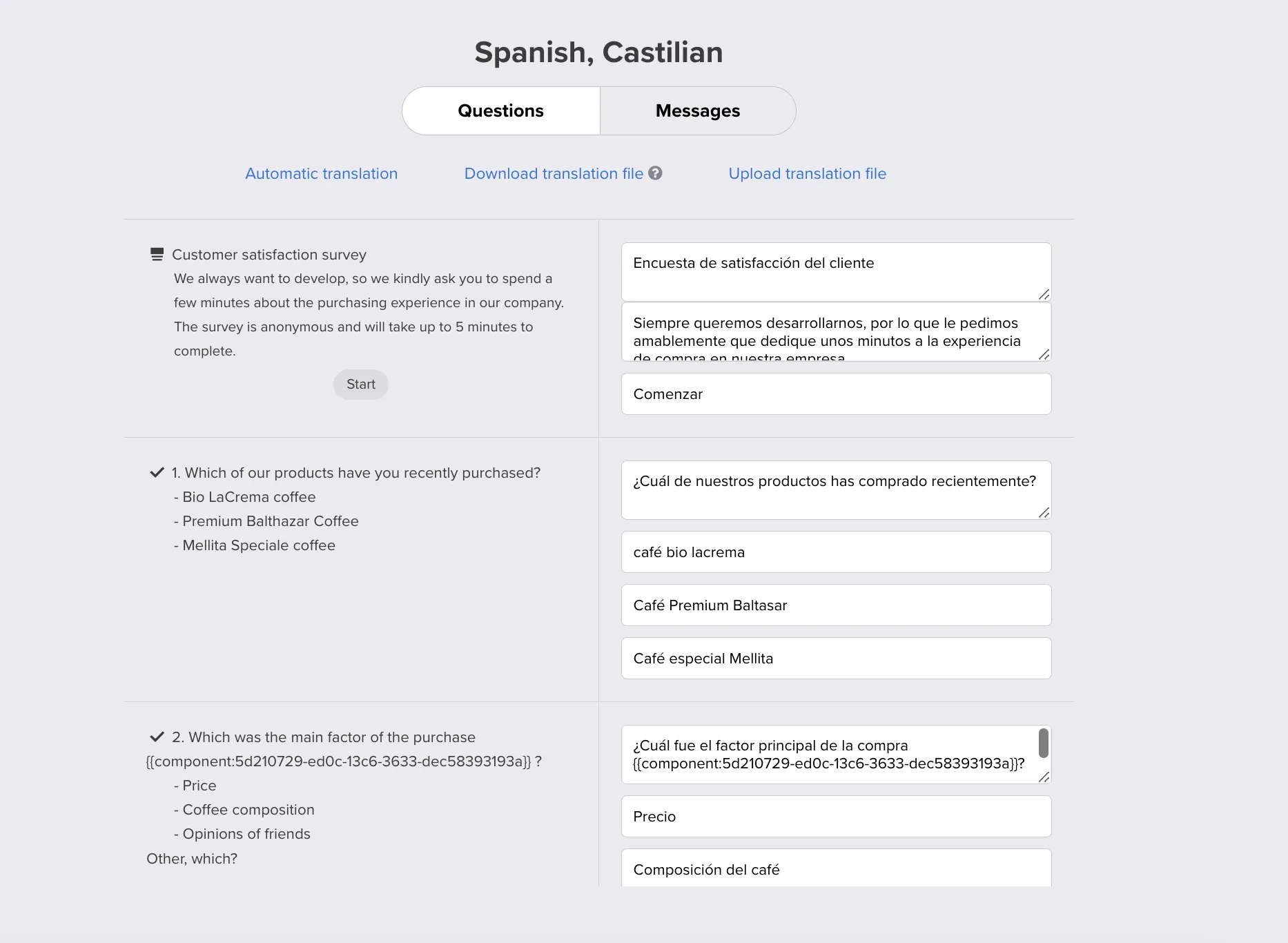
Once you have added languages, click the preview icon on the right to review automated translations before respondents see them.
Upload a survey translation file
For agency or localization workflows:
- Download the translation template after you add a language (Excel .xlsx format).
- Fill in translations in the designated columns for each language.
- Upload the completed file back into Responsly; respondents then see every language you enabled.
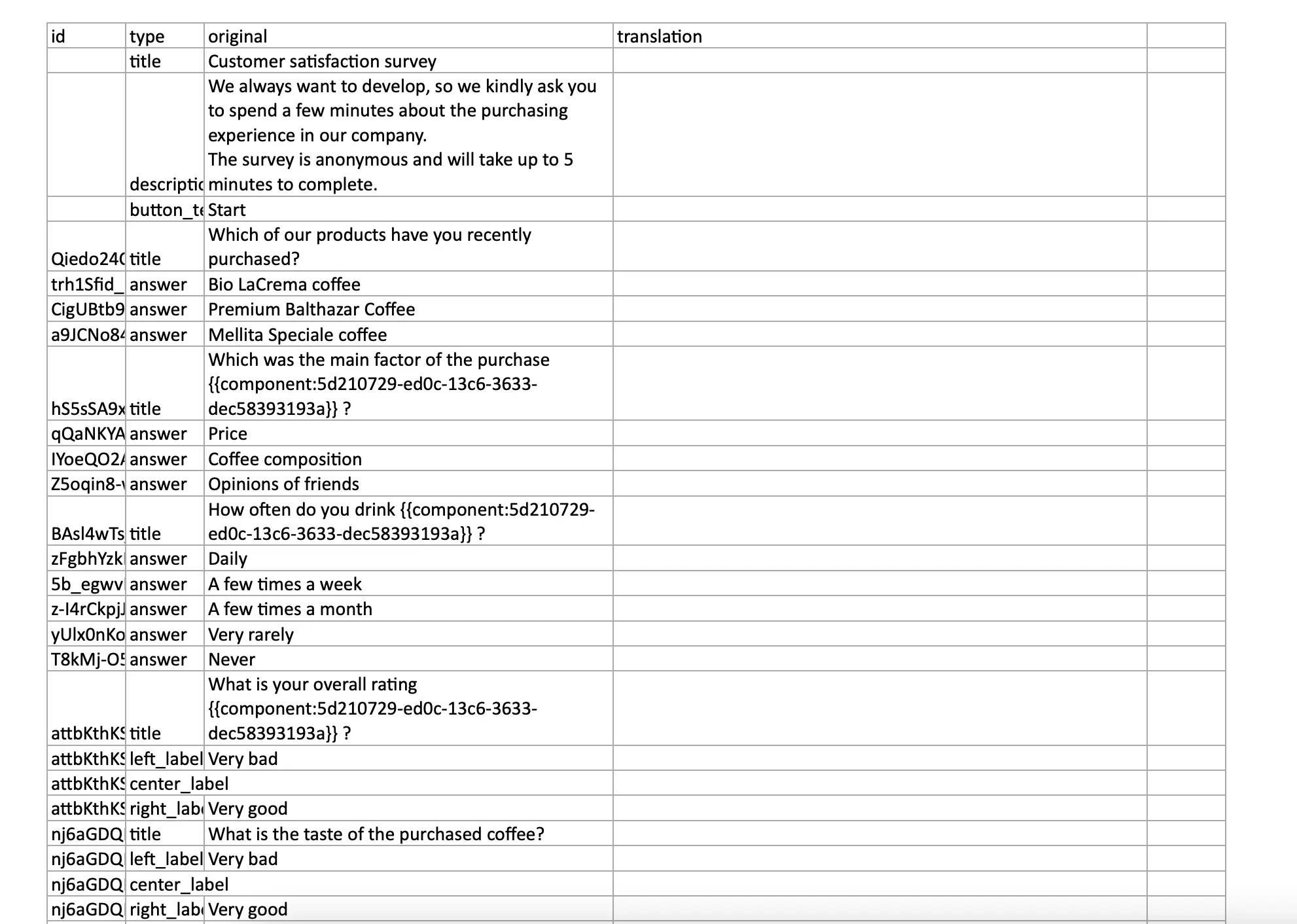
Template integrity
Keep columns A, B, C and rows 1–3 unchanged—they contain structure and instructions Responsly relies on when importing.
Sending a multilingual survey
You can send language-specific URLs so the survey opens with that translation pre-selected—respondents do not need to use the dropdown.
The base URL stays the same family as your main survey link: language links do not create separate collectors; all responses still land in the same project for unified reporting.
Analyzing a multilingual survey
All responses—regardless of language—are stored in one dataset. In Analysis, question and answer text is usually shown in your default survey language, but the metrics include every submission.
When you export, labels in the file typically follow the default language as well; filter by language first if you need exports or charts scoped to one locale.
To see which language each person used, check Individual responses or export to XLS (or SPSS where supported) and review the language field there.
For spreadsheet exports and PDFs from Analysis, see How do I export survey data?. If you are still building the first version of the form, start with How to create a survey.