A numerical scale question asks respondents to pick a number-backed option—each choice maps to a specific numeric value—so you can analyse answers as quantitative data in charts, averages, and crosstabs without manual recoding.
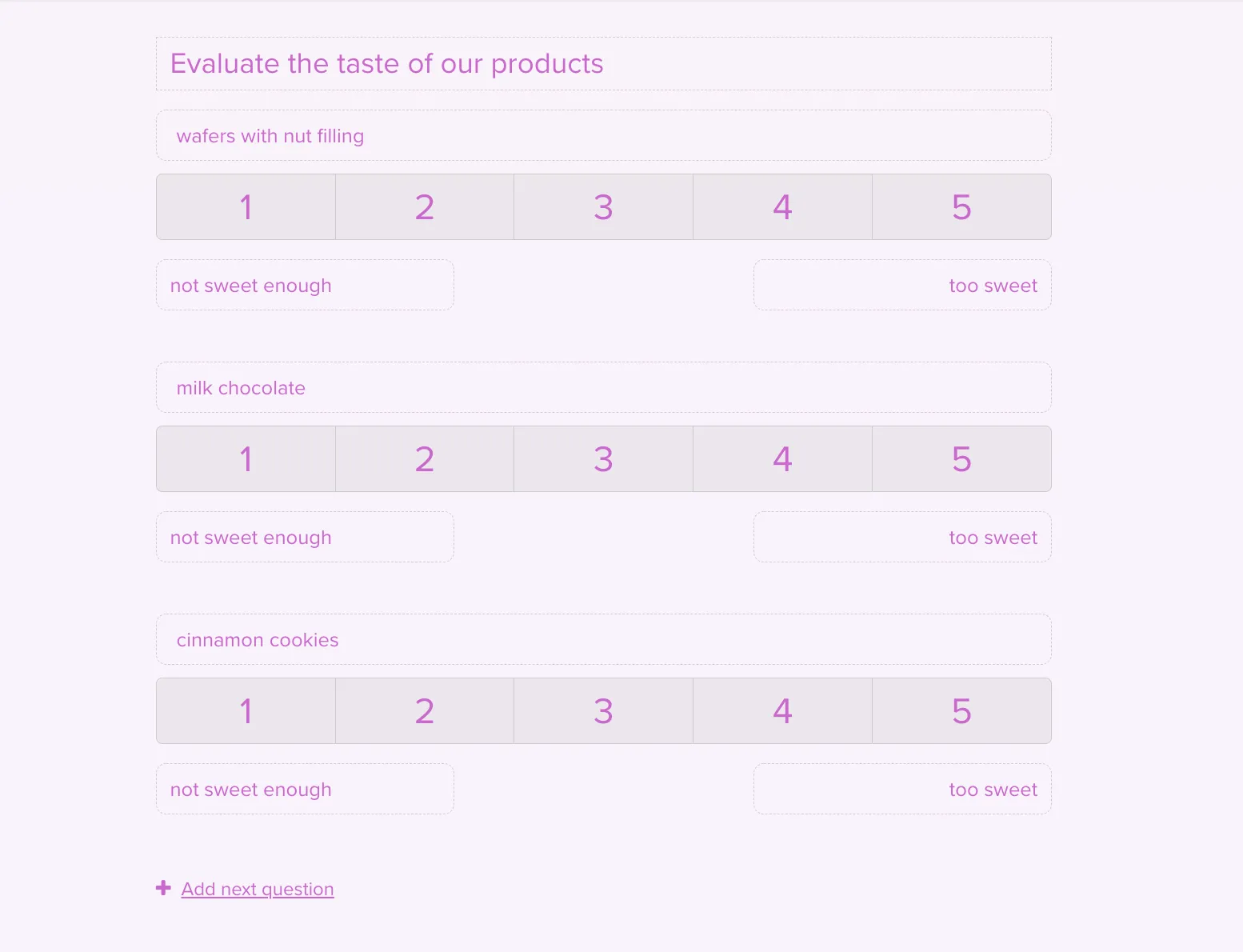
When numerical scales work well
This format fits Likert-style intensity, pain or discomfort scales, satisfaction, likelihood to recommend, loyalty, and any concept where ordered numbers communicate more than arbitrary text labels alone.
You usually label the endpoints so both extremes are explicit—for example 0 = “Not at all likely” and 10 = “Extremely likely”—while intermediate numbers inherit that meaning.
Design tips
- Keep the range understandable (for example 0–10 or 1–5) for your audience and culture.
- Add a short question stem that states what the numbers measure (“In the last 30 days…”).
- Mark critical items as required only when a number is mandatory for routing or scoring.
For continuous drag input instead of discrete numbers, compare Slider questions. For paired opposite adjectives on one line, see Semantic differential.