Ranking questions ask respondents to order a closed list—for example from most to least important or preferred. You get comparative data: who ranks what first, and how the whole list sorts for each person.
When ranking works well
Ranking helps when:
- you need priorities (product roadmap, policy trade-offs),
- every item must be placed relative to the others,
- you want one task instead of many separate scale questions.
It differs from a numerical scale or slider, where each statement is often scored independently. Ranking forces a sequence, which is stronger for “top three” style decisions but can feel heavier if the list is long.
Writing clear instructions
Name the rule for position 1 versus the last slot so everyone interprets numbers the same way.
Example instruction:
“Rank each item in order of importance, with no. 1 as the most important and no. 4 as the least important.”
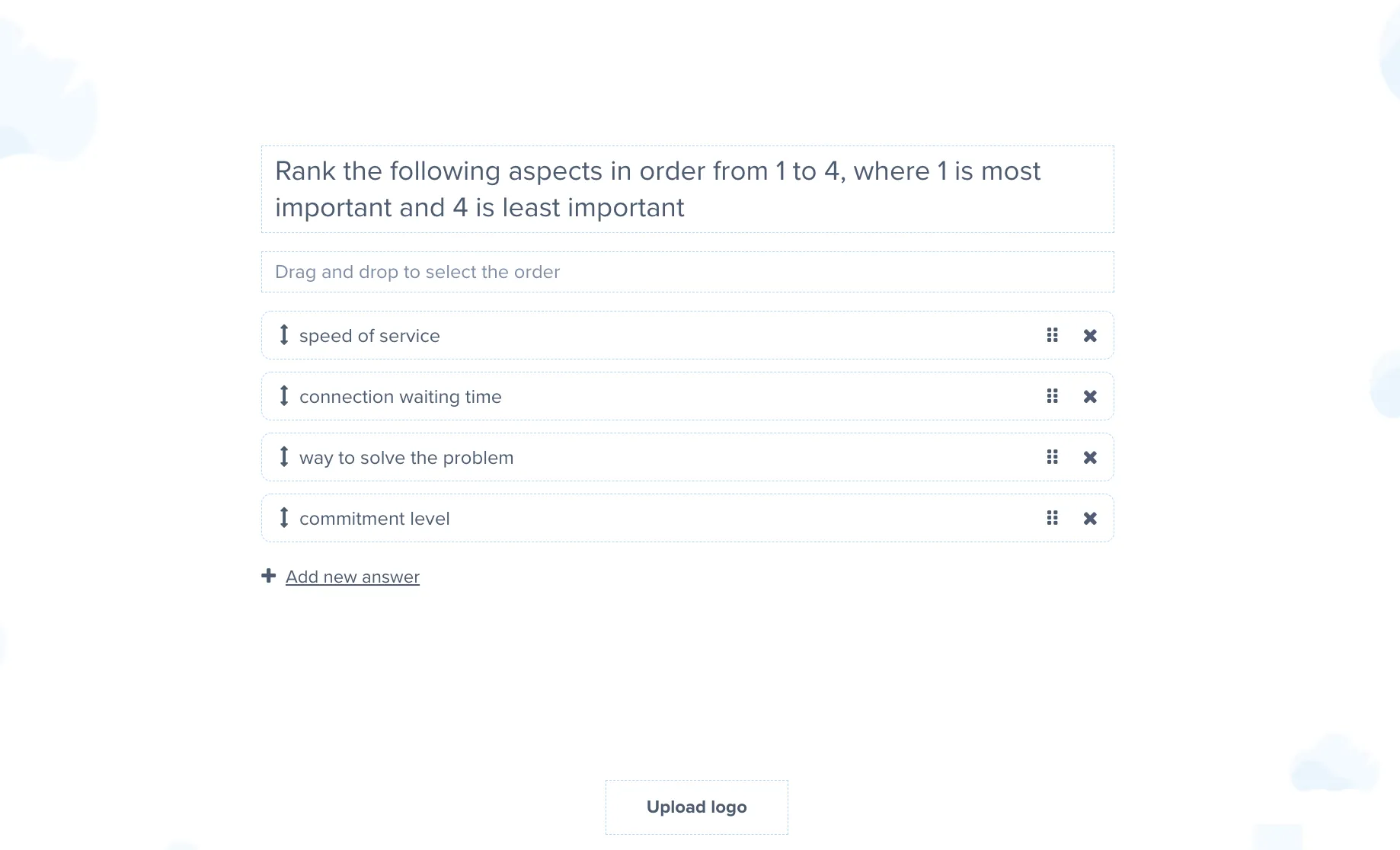
If order bias matters for how options are read, combine ranking with random order where appropriate. Mark the ranking block as required only when a full ordering is essential for your analysis.