Table of contents
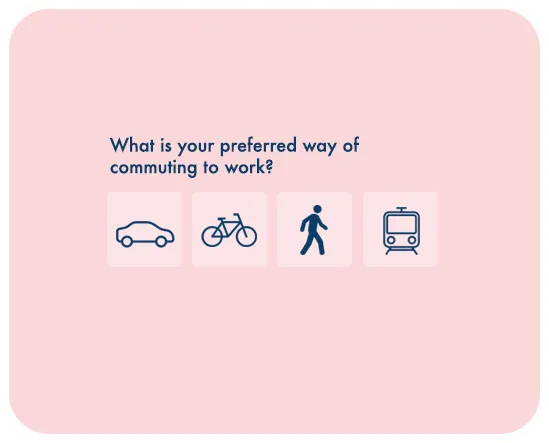
In the world of data collection, the terms questionnaire vs survey are often used interchangeably—but they are not the same. If you’re building a customer feedback strategy, conducting market research, or trying to improve employee experience, knowing the difference can directly impact the accuracy and value of your insights.
In this comprehensive guide, we’ll break down the definitions, use cases, and key distinctions between questionnaires and surveys, and explain when to use each for maximum effectiveness. Whether you’re a marketer, HR leader, or product manager, this post will help you make smarter, data-driven decisions.
What is the Difference Between Survey and Questionnaire?
A survey is a research method used to gather data and information from a group of individuals to understand their opinions, attitudes, behaviors, or experiences on a particular topic. Various data collection techniques are used in surveys, including questionnaires.
A questionnaire is a specific tool within a survey that collects structured data through a set of standardized questions.
In other words, “questionnaire” describes the content, while “survey” is a broader term that describes the content, method, and analysis.
A survey goes much deeper than a questionnaire and often involves more than one data collection form.
The Definition of a Questionnaire
A questionnaire is a set of questions typically used for research purposes that can be qualitative and quantitative.
The purpose of a questionnaire is to gather data from a target audience. It will include open-ended questions, closed-ended questions, or a combination of both.
Types of Questionnaires by Distribution
Whether the respondent completes the questionnaire themselves or through an interviewer, we distinguish between:
- Survey questionnaire: Self-administered by the respondent
- Interview questionnaire: Administered by an interviewer
The questionnaire can be distributed electronically (CAWI - Computer Assisted Web Interviewing). For interview questionnaires, the survey can be conducted by telephone (CATI) or in the presence of an interviewer (CAPI).
Types of Questionnaires by Purpose
There are two main types:
Variable-focused questionnaires: Evaluate separate variables, including questions about behavior, facts, and preferences.
Scale-based questionnaires: Measure factors incorporated into a scale—those about individual identities, attributes, indexes, and traits.
Survey Definition
A survey is both an information-gathering technique and a printed or electronic sheet consisting of one or more questions on a given topic.
Because questionnaires are often answered by people from specific groups (e.g., students, women on maternity leave, or retirees), there may be sample bias or sampling error that makes results not representative. Therefore, surveys allow you to establish and maintain contact with a given target group, but should be treated with caution when making strategic decisions.
The ultimate purpose of a survey is to find out more about a particular group of people. For example, businesses use surveys to learn more about how specific consumers behave.
Survey Response Types
When answering survey questions, respondents have two options:
- Open-ended questions: They can explain their answer in a descriptive style
- Close-ended questions: They choose from pre-defined options
Surveys are the standard method for completing research in which respondents are addressed concerning awareness, demographics, motivations, and behavior.
Key Differences Summarized
In the end, surveys and questionnaires have more in common than different, with one being part of the other. The main distinction is how they are presented to a respondent.
| Aspect | Questionnaire | Survey |
|---|---|---|
| Scope | A set of questions | Complete research method |
| Purpose | Data collection | Data collection + analysis |
| Components | Questions only | Questions + methodology + analysis |
| Output | Raw data | Insights and conclusions |
The Impact of Survey Design
The way you design, implement, and analyze a survey impacts your results as much as the questions you ask:
1. Survey Design
Survey design marks a critical difference between survey and questionnaire. It involves planning each part of your survey project—from defining your survey goals to aligning who reviews your responses. Familiarize yourself with ready-made survey templates that you can quickly adapt to your requirements.
2. Data Collection Methods
The way you collect responses impacts your survey. You can use several approaches:
- Sharing a link to your survey on social media
- Emailing the survey to your audience
- Embedding it on your site
3. Integrations and Analysis
Connect your surveys and forms to your favorite apps. Integrations offer virtually endless ways to segment, aggregate, and analyze your survey responses so you can better understand your feedback and make significant decisions.
Summary:
- A questionnaire is one-purpose data collection through a set of questions
- A survey is data collection through a set of questions for statistical analysis
When to Use a Survey Instead of a Questionnaire
Though surveys ultimately offer more value for researchers than questionnaires, some situations warrant the use of stand-alone questionnaires. Questionnaires are the more logical option when you want to compile an individual’s information for purposes like:
- Accepting donations
- Creating email lists
- Gathering details for payment processing
- Conducting job interviews
When Surveys Are Better
Surveys are more useful when you’re looking to receive feedback from respondents and want to make inferences based on the acquired information. These methods are practical when achieving a focused goal and making it accessible to a target demographic.
Examples where a survey is the better choice:
- Obtaining customer feedback after an experience
- Determining a product’s success
- Gauging employee satisfaction
- Conducting exit interviews
- Evaluating brand awareness
Practical Tips
Define your goals first: Know whether you need simple data collection (questionnaire) or comprehensive insights (survey).
Consider your audience: Match your approach to your target respondents’ preferences and capabilities.
Plan for analysis: If you need to analyze and draw conclusions, design a full survey with proper methodology.
Use the right tools: Modern survey platforms like Responsly can help you create both questionnaires and full surveys with built-in analysis features.
Ready to get started? Create a free Responsly account and build professional surveys and questionnaires in minutes.
FAQ
What is the main difference between a survey and a questionnaire?
When should I use a survey instead of a questionnaire?
Can a questionnaire be part of a survey?
Tagged in
Last updated